
Teddy Swims VibeZ

A tattooed guy from Georgia who used to sing metal covers on YouTube now has one of the biggest soul voices in popular music. Fifty tracks explain how that happened.

The internet's best-kept secret, until he wasn't

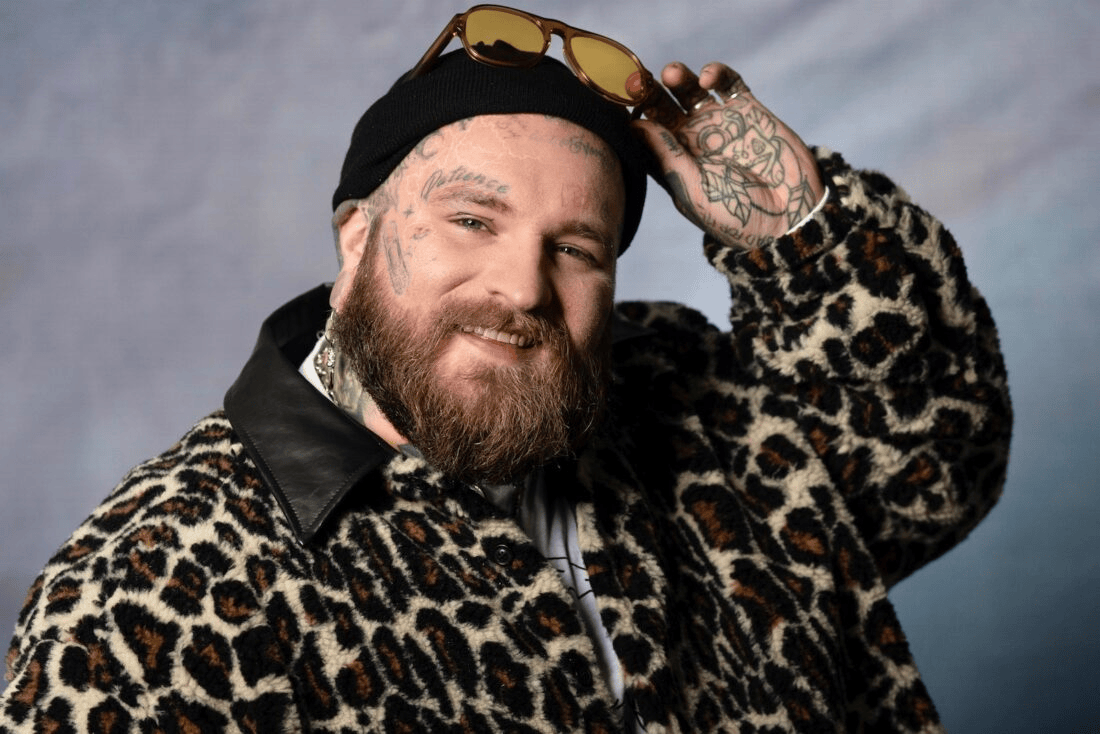
Jaten Dimsdale, from Conyers, Georgia, spent years as a genuinely uncategorisable YouTube presence — a singer with a huge, gravelled soul voice who would cover Michael Jackson, then Shania Twain, then a metalcore track, then Sam Cooke. The name Teddy Swims is an acronym: Someone Who Isn't Me Sometimes. He came from a background in hardcore and metal bands, which explains the physical size of the voice and its comfort at the top of his range.

The covers built the audience; the originals converted it. "Lose Control", released in 2023, became one of the longest-charting singles of the decade, spending a remarkable stretch on the Billboard Hot 100 and eventually reaching number one — a slow, grinding climb rather than a debut splash, which suits the record's stubbornness.

What to listen for

"Lose Control" is the obvious centrepiece and remains the best argument for him: an unfashionably direct song about addiction and self-sabotage, sung without a shred of irony, over an arrangement that borrows more from Otis Redding than from anything on contemporary radio.

"Bad Dreams," "The Door" and "Guilty" work the same territory — big chorus, live band, a lyric about being the problem. "Funeral" and "Some Things I'll Never Know" are the ones where he pulls back and lets the tone carry it.

The collaborations show the range of rooms he fits into: "Are You Even Real" with GIVÊON pairs two of the deepest voices in current R&B, "Somethin' 'Bout A Woman" with Thomas Rhett is the country crossing, and "All That Really Matters" with ILLENIUM is the EDM one.

"You're Still The One" — the Shania Twain cover — is a direct link back to the YouTube days and worth hearing for context.

Fifty tracks. The voice does not get tired.

Go deeper

I've Tried Everything But Therapy (2023) and its second part are the albums, and both are more varied than the singles suggest — there is country, gospel and straight rock in there alongside the soul.

His YouTube covers remain a genuinely enjoyable rabbit hole and the best evidence of range. The Michael Jackson and Sam Cooke ones are the tell.

For the tradition he is drawing from, go to the source: Otis Redding, Joe Cocker and Bill Withers for the grain in the voice, Chris Stapleton for the modern country-soul parallel. Among current artists, Leon Bridges, GIVÊON and Michael Kiwanuka are working adjacent ground with more restraint.

Comments

Popular posts from this blog

Monty Alexander VibeZ

There is a moment on almost every Monty Alexander record where the jazz piano trio stops behaving like a jazz piano trio and starts behaving like a Kingston sound system. That moment is the whole point. Fifty tracks deep, this is the sound of a man who never asked permission to be two things at once. The pianist who brought Kingston to the Carnegie stage Monty Alexander was born in Kingston, Jamaica in 1944, and by his teens he was already gigging around the island — close enough to the birth of ska and rocksteady to have absorbed it in his bones rather than learned it from records. He moved to the United States in 1961, and the origin story that follows is the kind that sounds invented: Frank Sinatra heard him playing in a Miami club, and Jilly Rizzo, Sinatra's friend and club owner, put him behind the piano at Jilly's in New York. From there Alexander fell in with Milt Jackson and Ray Brown, two of the most demanding rhythm partners in the music, and never really ...

GuiltyBeatZ VibeZ

If you have danced to anything out of Accra in the last ten years, you have probably danced to GuiltyBeatz without knowing his name. Forty-seven tracks of a producer's fingerprints — and the fingerprints turn out to be the melody. The Ghanaian producer who made Afrobeats swing Ronald Banful, who records as GuiltyBeatz, is a Ghanaian producer and DJ whose sound sits at the crossroads where Ghanaian highlife, Nigerian Afrobeats, amapiano and UK dance music all meet. He came up producing for Mr Eazi — the Banku Music partnership is where a lot of listeners first heard him — and his breakout as a name in his own right came with "Akwaaba," the 2018 track with Mr Eazi, Patapaa and Pappy Kojo that spawned a dance craze and became one of the defining African club records of its year. His reputation went global when he worked on Beyoncé's The Lion King: The Gift , but the more interesting story is the consistency. A GuiltyBeatz beat is usually ide...

Kashif VibeZ

Kashif is the reason a lot of 1980s R&B sounds the way it does — and the reason you can hear the difference between a synth bassline played by someone who understood bass and one programmed by someone who didn't. This is a producer's playlist, and the producer is everywhere. The architect of the synthesized soul record Kashif was born Michael Jones in Brooklyn in 1956, raised in foster care, and taught himself music young enough that by his teens he was touring with B.T. Express. What he did next reshaped a decade. In the early 1980s, as a producer, arranger and multi-instrumentalist, he was among the first to build R&B records around programmed synthesizers — the Minimoog bass, the Linn drum machine, the Fairlight — without letting them sound cold. That distinction matters. Plenty of producers adopted the new gear; Kashif made it groove . His basslines are played with the phrasing of a funk bassist, full of slides and ghost notes, which is why rec...