Recorded in 1960, released into a country that was not ready for it, and still one of the most uncompromising records in American music. This one is not background listening.
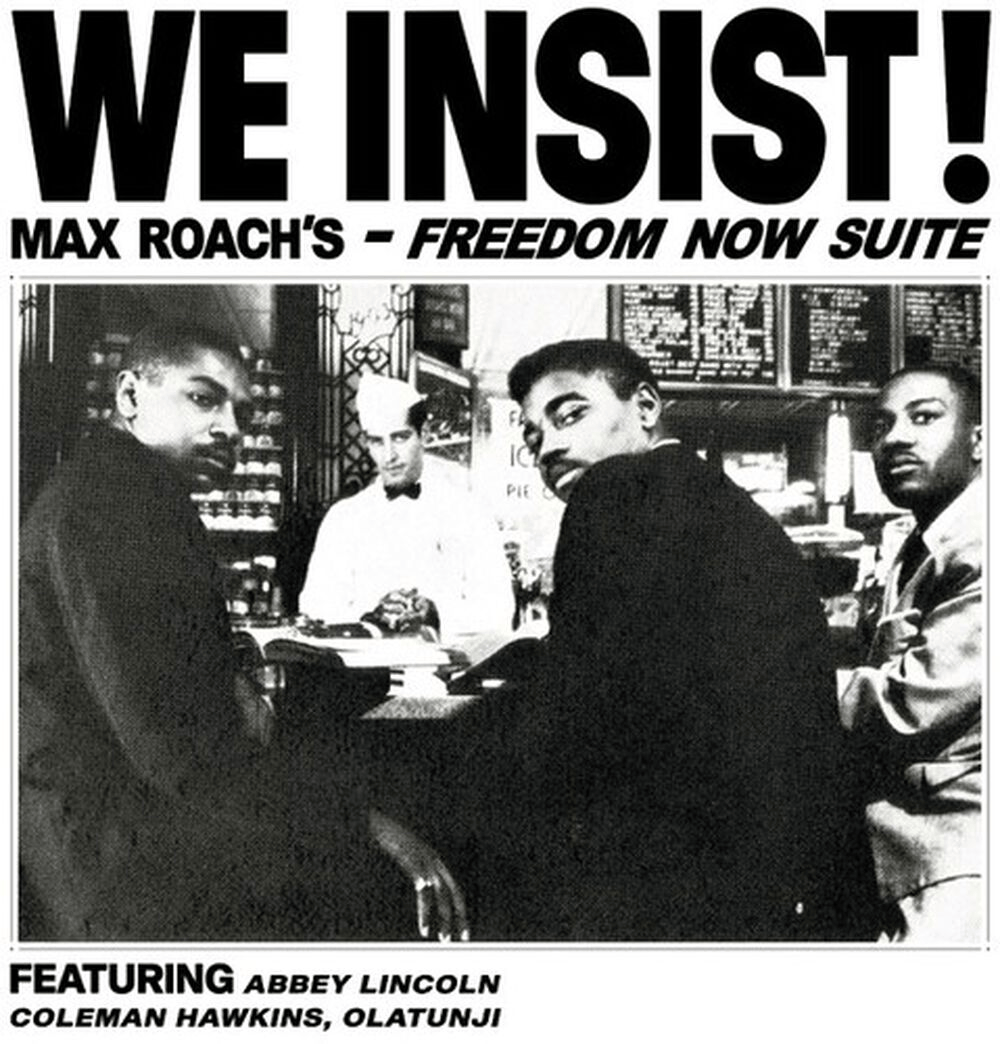
We Insist! Max Roach's Freedom Now Suite
Drummer Max Roach and lyricist Oscar Brown Jr. conceived the Freedom Now Suite for the centenary of the Emancipation Proclamation in 1963. Events overtook the plan — the sit-in movement began in Greensboro in February 1960, and Roach recorded the work that August instead, with a title that reads as a demand rather than a description.
The album cover is three Black men at a lunch counter, staring at the camera. In 1960, on a jazz record, that was an act of confrontation. Several distributors would not handle it, and it damaged Roach's commercial standing for years.
The music matches the cover. It traces a line from slavery through emancipation to the anti-colonial and anti-apartheid struggles then underway in Africa, and it does so without a single moment of reassurance.
What to listen for
"Driva'man" opens in an unusual 5/4 time, with Abbey Lincoln singing a work-song lyric while Roach strikes a tambourine like a whip crack on every measure. The effect is deliberate and extremely uncomfortable. Coleman Hawkins — the elder statesman of the tenor saxophone, seventy years old and playing on a protest record — takes the solo.
"Freedom Day" is the celebration, and it is uneasy: the lyric keeps asking whether the news is actually true.
"Triptych: Prayer / Protest / Peace" is the centre of the record and one of the most extraordinary performances in jazz — just Roach and Abbey Lincoln, drums and voice. The Protest section is close to two minutes of screaming. It is not a metaphor and it is not comfortable, and Lincoln took years of criticism for it.
"All Africa" features Nigerian percussionist Babatunde Olatunji and recites the names of African peoples over drums. "Tears For Johannesburg" responds to the Sharpeville massacre of March 1960, in which South African police killed sixty-nine people.
Go deeper
Abbey Lincoln deserves her own investigation — her later albums, particularly Talking to the Sun and A Turtle's Dream, are magnificent, and her partnership with Roach shaped both of them.
For the tradition of jazz as political statement: Charles Mingus's "Fables of Faubus," John Coltrane's "Alabama," Nina Simone's "Mississippi Goddam," and Archie Shepp's Attica Blues.
Roach's own Percussion Bitter Sweet continues the argument, and his later duo recordings with Cecil Taylor and Anthony Braxton show a musician who never stopped pushing.
Comments
Post a Comment