Eddie Rockerz VibeZ - curated playlists, mixes and music commentary

Dig the crates

Every playlist on the blog, sorted by where it takes you.

Browse all 600+ VibeZ

DJ Mixes & Series

The house sets, the Producer Series and the running volumes.

Show all 16Show fewer

GuiltyBeatZ VibeZ

If you have danced to anything out of Accra in the last ten years, you have probably danced to GuiltyBeatz without knowing his name. Forty-seven tracks of a producer's fingerprints — and the fingerprints turn out to be the melody.
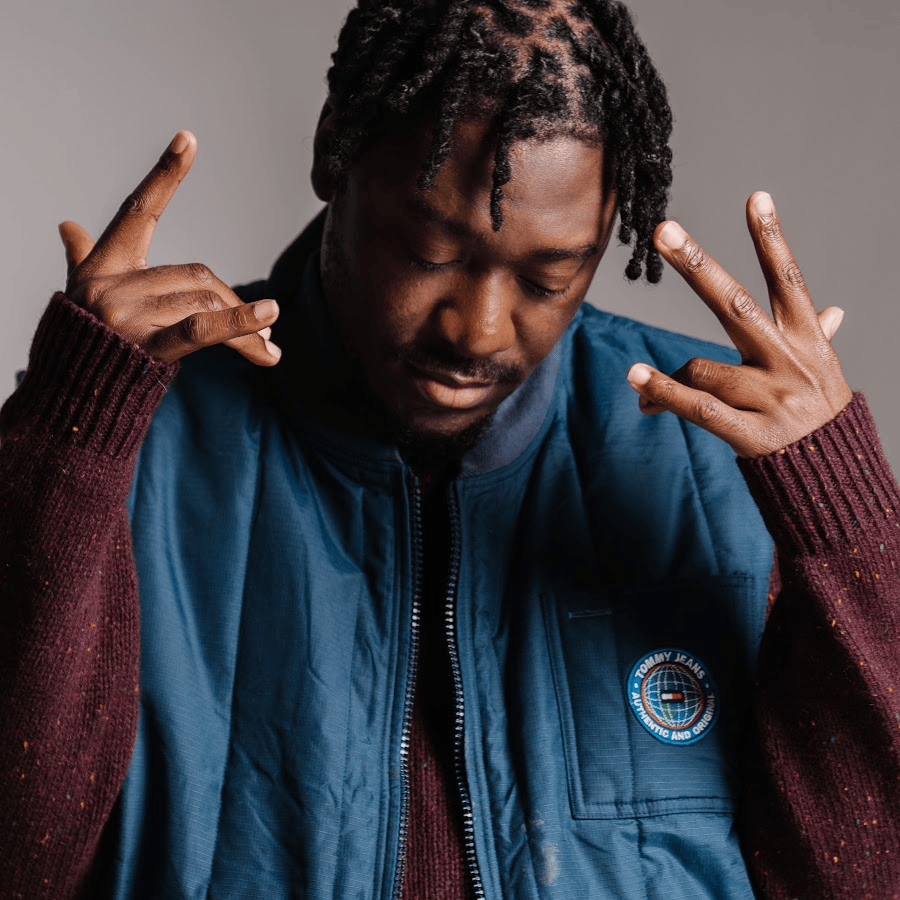

The Ghanaian producer who made Afrobeats swing

Ronald Banful, who records as GuiltyBeatz, is a Ghanaian producer and DJ whose sound sits at the crossroads where Ghanaian highlife, Nigerian Afrobeats, amapiano and UK dance music all meet. He came up producing for Mr Eazi — the Banku Music partnership is where a lot of listeners first heard him — and his breakout as a name in his own right came with "Akwaaba," the 2018 track with Mr Eazi, Patapaa and Pappy Kojo that spawned a dance craze and became one of the defining African club records of its year.

His reputation went global when he worked on Beyoncé's The Lion King: The Gift, but the more interesting story is the consistency. A GuiltyBeatz beat is usually identifiable within eight bars: bright, melodic, unhurried, built on a percussion bed that leaves space rather than filling it. He is a producer who trusts the groove to do the persuading.

What to listen for

The playlist works as a map of his range. "Akwaaba" and "Pilolo" (with Kwesi Arthur and Mr Eazi) are the Ghanaian club canon. "All of This" pairs him with Jorja Smith and shows how easily his production absorbs a British soul voice. "Dilemma" with Stefflon Don and Sidhu Moose Wala reaches toward Punjabi pop, and "Up Inna" throws him in with M.I.A., Cadenza, BEAM, Cham and Alicai Harley for a dancehall pile-up.

Pay particular attention to the collaborations with newer West African voices: "No Love" with Joeboy, "Uthando" with Nonso Amadi, "All My Love" with Oxlade and KiDi, and "IYABO" with Falz and Joey B. These are the tracks where you can hear him producing for a singer rather than around one — leaving air, dropping the percussion out under a vocal line, then bringing it back exactly where your body expects it.

The amapiano-leaning cuts near the back — "2000" with Smallgod, Major League DJz and Uncle Vinny — are worth staying for. They show a producer who has followed the continent's rhythms as they shifted, rather than defending the sound that made him.

Forty-seven tracks is a lot. It is also roughly what it takes to demonstrate that one man has been quietly shaping the sound of a region.

Go deeper

The obvious next stop is Mr Eazi's Life Is Eazi mixtapes, where the GuiltyBeatz partnership is at its most concentrated and the Banku Music aesthetic — Ghanaian highlife melody over Nigerian rhythm — is spelled out most clearly.

For the wider Ghanaian producer scene, Juls is the essential companion listen: a similar instinct for space and melody, a slightly softer touch. Kwesi Arthur and King Promise are the vocalists who best show what Accra's writers do with these beats.

And if the amapiano-leaning end of this playlist grabbed you, follow Major League DJz backwards. Their Amapiano Balcony Mix series is the single best archive of how that sound crossed from Johannesburg into West Africa and back again.

Comments

Popular posts from this blog

Monty Alexander VibeZ

There is a moment on almost every Monty Alexander record where the jazz piano trio stops behaving like a jazz piano trio and starts behaving like a Kingston sound system. That moment is the whole point. Fifty tracks deep, this is the sound of a man who never asked permission to be two things at once. The pianist who brought Kingston to the Carnegie stage Monty Alexander was born in Kingston, Jamaica in 1944, and by his teens he was already gigging around the island — close enough to the birth of ska and rocksteady to have absorbed it in his bones rather than learned it from records. He moved to the United States in 1961, and the origin story that follows is the kind that sounds invented: Frank Sinatra heard him playing in a Miami club, and Jilly Rizzo, Sinatra's friend and club owner, put him behind the piano at Jilly's in New York. From there Alexander fell in with Milt Jackson and Ray Brown, two of the most demanding rhythm partners in the music, and never really ...

Kashif VibeZ

Kashif is the reason a lot of 1980s R&B sounds the way it does — and the reason you can hear the difference between a synth bassline played by someone who understood bass and one programmed by someone who didn't. This is a producer's playlist, and the producer is everywhere. The architect of the synthesized soul record Kashif was born Michael Jones in Brooklyn in 1956, raised in foster care, and taught himself music young enough that by his teens he was touring with B.T. Express. What he did next reshaped a decade. In the early 1980s, as a producer, arranger and multi-instrumentalist, he was among the first to build R&B records around programmed synthesizers — the Minimoog bass, the Linn drum machine, the Fairlight — without letting them sound cold. That distinction matters. Plenty of producers adopted the new gear; Kashif made it groove . His basslines are played with the phrasing of a funk bassist, full of slides and ghost notes, which is why rec...

De La Soul VibeZ (R.I.P Trugoy the Dove)

Trugoy the Dove died in February 2023, weeks before De La Soul's catalogue finally reached streaming after a fifteen-year legal deadlock. Thirty-one tracks, and a difficult kind of timing. Rest in peace, Dave David Jude Jolicoeur — Trugoy the Dove, later just Dave — formed De La Soul in Amityville, Long Island with Posdnuos and Maseo. Their 1989 debut 3 Feet High and Rising , produced with Prince Paul , remains one of the most inventive records in the history of the genre: dense with samples from Steely Dan to Johnny Cash to French language instruction tapes, funny, formally strange, and entirely uninterested in the postures rap was expected to strike. The consequence of that invention was a curse. The sample clearance landscape changed after Gilbert O'Sullivan sued Biz Markie in 1991, and De La Soul's early catalogue — built on hundreds of uncleared fragments — became legally impossible to license. For roughly fifteen years, their most important a...