A songwriter, producer and singer from Port Elizabeth who does all three at a level almost nobody in her scene matches. Fifteen tracks of Zonke.
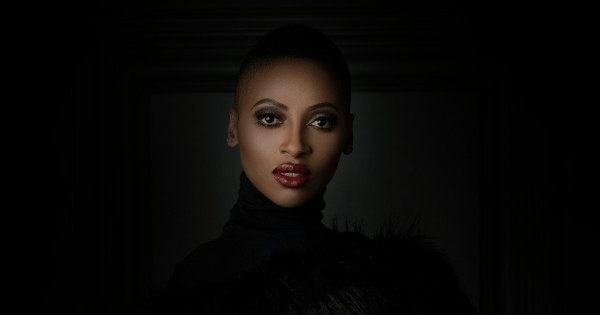
Zonke Dikana
Zonke Dikana was born in KwaZakhele, Port Elizabeth in 1979, into a musical family — her father Vuyisile was a drummer, and her late stepmother Anneline Malebo sang with the band Joy. Her sister Lulu Dikana was also a recording artist, and died in 2014.
She took a degree in human resource management from the University of the Free State before committing to music, started in house, and moved toward Afro-soul and neo-soul. The breakthrough was Ina Ethe (2011), which went double platinum in South Africa and established her as one of the country's major artists. She signed with Sony in 2013 and has since released Work of Heart, L.O.V.E, Enigma and Embo.
She names Sade, Miriam Makeba and Brenda Fassie as her influences, and you can hear all three — Sade in the restraint, Makeba in the linguistic commitment, Fassie in the willingness to be enormous when the song calls for it. She writes, produces and arranges her own material, which remains rare anywhere.
What to listen for
"Feelings" is her most famous song and the best entry point — a slow, aching record that became genuinely ubiquitous in South Africa.
"Oko" and "Uzohamb'ubuye" are in isiXhosa and among her strongest writing. "Nameless" and "Those Days" are the English-language equivalents.
The Live in Johannesburg (Lyric Theatre, 2013) recordings — "Say Now" and "Nomanyange" — are the ones to hear first if you want to understand why she matters. Her live performances are where the voice is fully unleashed.
"Gardens Of Eden" with Black Coffee is the house connection that reaches back to where she started, and "Bayathetha" with OSKIDO — a founding figure of kwaito — is the other link to South African dance music history.
"S.O.S - Release Me" and "Reach It" show the range.
Go deeper
Ina Ethe (2011) is the album, and Work of Heart (2015) the one where her production is most confident.
For the scene: Amanda Black, Simphiwe Dana, Ami Faku and Thandiswa Mazwai — the last of whom, formerly of Bongo Maffin, is one of the most important South African artists of the past thirty years and barely known abroad.
For the elders: Miriam Makeba, Brenda Fassie, Busi Mhlongo, and Letta Mbulu, whose voice appears on Michael Jackson's "Liberian Girl."
Comments
Post a Comment