
Classic Recordings: Yussef Dayes- Black Classical Music (Debut)

A drummer from South East London titles his debut album Black Classical Music and then spends nineteen tracks proving the phrase is not a provocation but a description.
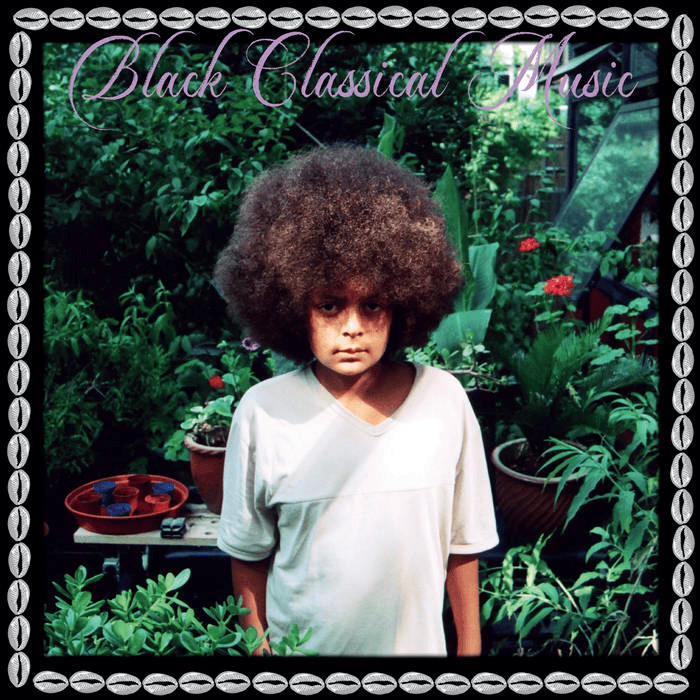

Yussef Dayes and the argument in the title

Yussef Dayes came up in London's extraordinary young jazz scene, first widely heard in the duo Yussef Kamaal with keyboardist Kamaal Williams, whose Black Focus (2016) was one of the records that announced the whole movement. He then made What Kinda Music with Tom Misch, and in 2023 delivered this — his first solo album, and the fullest statement of what he actually does.

The title is the thesis. "Classical music" as a term has always quietly meant European art music, with everything else filed as folk, popular or ethnic. Dayes' point is that jazz, and the wider Black musical tradition it belongs to, is classical music by every meaningful definition: formally sophisticated, technically demanding, built on a canon, and passed between generations of trained practitioners. He does not argue this in interviews so much as demonstrate it across nineteen tracks.

What to listen for

The drumming is the event. Dayes plays with a fluidity that comes from studying West African and Caribbean rhythm alongside jazz — the pulse is constantly shifting, but never loses its centre. "Chasing the Drum" and "Early Dayes" are the clearest showcases.

"Pon di Plaza" with Chronixx is the standout collaboration — one of reggae's finest modern voices over a drummer who understands Jamaican rhythm from the inside.

"Raisins Under the Sun" features Shabaka Hutchings, the saxophonist and clarinettist at the centre of the same London scene, and the title nods to Langston Hughes by way of Lorraine Hansberry.

"Marching Band" with Masego is the most immediately charming thing here; "Cowrie Charms" with Leon Thomas the most soulful. "Woman's Touch" with Jamilah Barry and "Magnolia Symphony" show the compositional ambition.

Go deeper

Yussef Kamaal's Black Focus is the essential prequel, and What Kinda Music with Tom Misch is the most accessible way in.

The wider London scene is one of the most important things happening in music: Shabaka Hutchings (Sons of Kemet, The Comet Is Coming), Nubya Garcia, Moses Boyd, Ezra Collective and Emma-Jean Thackray. Much of it traces back to Tomorrow's Warriors, the education programme that trained a remarkable number of these musicians.

And for the tradition Dayes is claiming: Max Roach, Elvin Jones, Tony Williams and Art Blakey — four drummers who were composers in everything but title.

Comments

Popular posts from this blog

Monty Alexander VibeZ

There is a moment on almost every Monty Alexander record where the jazz piano trio stops behaving like a jazz piano trio and starts behaving like a Kingston sound system. That moment is the whole point. Fifty tracks deep, this is the sound of a man who never asked permission to be two things at once. The pianist who brought Kingston to the Carnegie stage Monty Alexander was born in Kingston, Jamaica in 1944, and by his teens he was already gigging around the island — close enough to the birth of ska and rocksteady to have absorbed it in his bones rather than learned it from records. He moved to the United States in 1961, and the origin story that follows is the kind that sounds invented: Frank Sinatra heard him playing in a Miami club, and Jilly Rizzo, Sinatra's friend and club owner, put him behind the piano at Jilly's in New York. From there Alexander fell in with Milt Jackson and Ray Brown, two of the most demanding rhythm partners in the music, and never really ...

GuiltyBeatZ VibeZ

If you have danced to anything out of Accra in the last ten years, you have probably danced to GuiltyBeatz without knowing his name. Forty-seven tracks of a producer's fingerprints — and the fingerprints turn out to be the melody. The Ghanaian producer who made Afrobeats swing Ronald Banful, who records as GuiltyBeatz, is a Ghanaian producer and DJ whose sound sits at the crossroads where Ghanaian highlife, Nigerian Afrobeats, amapiano and UK dance music all meet. He came up producing for Mr Eazi — the Banku Music partnership is where a lot of listeners first heard him — and his breakout as a name in his own right came with "Akwaaba," the 2018 track with Mr Eazi, Patapaa and Pappy Kojo that spawned a dance craze and became one of the defining African club records of its year. His reputation went global when he worked on Beyoncé's The Lion King: The Gift , but the more interesting story is the consistency. A GuiltyBeatz beat is usually ide...

Kashif VibeZ

Kashif is the reason a lot of 1980s R&B sounds the way it does — and the reason you can hear the difference between a synth bassline played by someone who understood bass and one programmed by someone who didn't. This is a producer's playlist, and the producer is everywhere. The architect of the synthesized soul record Kashif was born Michael Jones in Brooklyn in 1956, raised in foster care, and taught himself music young enough that by his teens he was touring with B.T. Express. What he did next reshaped a decade. In the early 1980s, as a producer, arranger and multi-instrumentalist, he was among the first to build R&B records around programmed synthesizers — the Minimoog bass, the Linn drum machine, the Fairlight — without letting them sound cold. That distinction matters. Plenty of producers adopted the new gear; Kashif made it groove . His basslines are played with the phrasing of a funk bassist, full of slides and ghost notes, which is why rec...