
The SOS Band VibeZ

Twelve tracks, and at least four of them are load-bearing walls of the entire post-disco R&B canon. The S.O.S. Band did not make many albums. They did not need to.
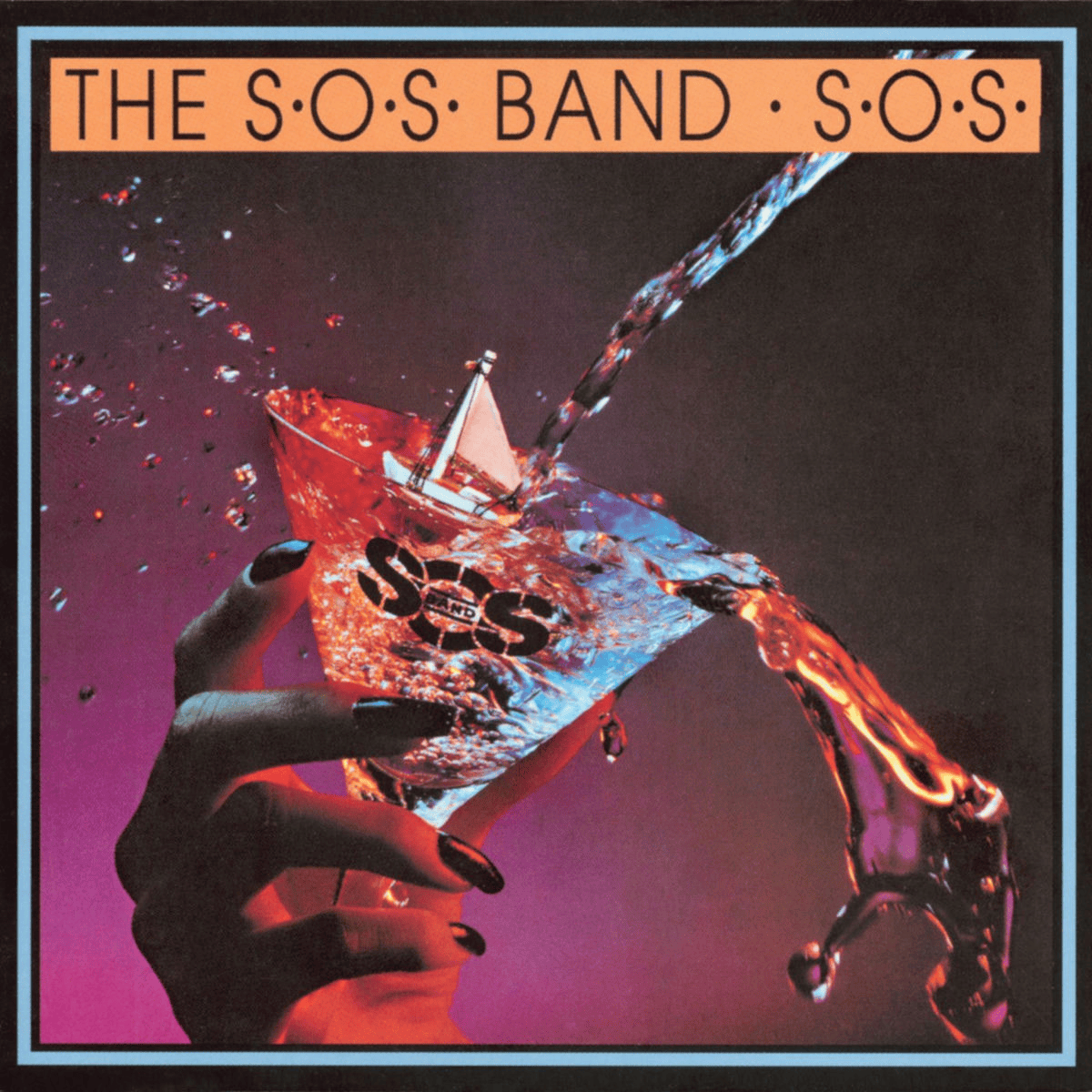

Atlanta, Minneapolis, and the sound of the eighties groove

The S.O.S. Band came out of Atlanta at the end of the 1970s — the name stood for Sounds of Success — fronted by Mary Davis, whose voice had a cool, slightly withholding quality that turned out to be exactly right for what came next. Their 1980 debut single "Take Your Time (Do It Right)" was a straight-up post-disco smash, and it could easily have been the whole story.

What changed everything was the arrival of Jimmy Jam and Terry Lewis. Fresh out of The Time and newly working as an independent production team, the pair began producing the band in 1983, and the S.O.S. Band became the laboratory where the Jam & Lewis sound was worked out — the spacious programmed drums, the icy synth stabs, the tempo pulled deliberately back so the groove sits down instead of racing. Everything they later did with Janet Jackson, Alexander O'Neal and Cherrelle was rehearsed here first.

What to listen for

"Just Be Good To Me" in the 12-inch vocal remix is the essential track — one of the most sampled and covered records of its era, and the template for a certain kind of moody mid-tempo R&B that has never gone out of style. Beats International built "Dub Be Good To Me" on it; the bassline alone has had several careers.

"Tell Me If You Still Care" is the ballad that shows Davis's restraint, and "The Finest" (1986) is the late-period peak — glossy, confident, and built on a groove so relaxed it feels like it might stop.

The deep cuts reward attention. "Weekend Girl," "Even When You Sleep" and "Borrowed Love" are where you hear Jam & Lewis experimenting with space — long instrumental passages, sudden drops to nothing but drums and a single keyboard line. "Groovin' (That's What We're Doin')" and "High Hopes" bring the tempo back up.

A short playlist that punches far above its length. Play it loud enough to hear what the bass is doing.

Go deeper

The Jam & Lewis thread is the one to pull. Their work with Cherrelle (High Priority), Alexander O'Neal (Hearsay) and above all Janet Jackson's Control and Rhythm Nation 1814 takes the ideas rehearsed on S.O.S. Band records and scales them up. Listening to Control straight after "Just Be Good To Me" makes the lineage obvious.

For the S.O.S. Band's own catalogue, On the Rise (1983) and Just the Way You Like It (1984) are the two albums to own.

And follow "Just Be Good To Me" forward: Beats International's "Dub Be Good to Me" took it to number one in the UK, and dozens of hip-hop and house records have borrowed from it since.

Comments

Popular posts from this blog

Monty Alexander VibeZ

There is a moment on almost every Monty Alexander record where the jazz piano trio stops behaving like a jazz piano trio and starts behaving like a Kingston sound system. That moment is the whole point. Fifty tracks deep, this is the sound of a man who never asked permission to be two things at once. The pianist who brought Kingston to the Carnegie stage Monty Alexander was born in Kingston, Jamaica in 1944, and by his teens he was already gigging around the island — close enough to the birth of ska and rocksteady to have absorbed it in his bones rather than learned it from records. He moved to the United States in 1961, and the origin story that follows is the kind that sounds invented: Frank Sinatra heard him playing in a Miami club, and Jilly Rizzo, Sinatra's friend and club owner, put him behind the piano at Jilly's in New York. From there Alexander fell in with Milt Jackson and Ray Brown, two of the most demanding rhythm partners in the music, and never really ...

GuiltyBeatZ VibeZ

If you have danced to anything out of Accra in the last ten years, you have probably danced to GuiltyBeatz without knowing his name. Forty-seven tracks of a producer's fingerprints — and the fingerprints turn out to be the melody. The Ghanaian producer who made Afrobeats swing Ronald Banful, who records as GuiltyBeatz, is a Ghanaian producer and DJ whose sound sits at the crossroads where Ghanaian highlife, Nigerian Afrobeats, amapiano and UK dance music all meet. He came up producing for Mr Eazi — the Banku Music partnership is where a lot of listeners first heard him — and his breakout as a name in his own right came with "Akwaaba," the 2018 track with Mr Eazi, Patapaa and Pappy Kojo that spawned a dance craze and became one of the defining African club records of its year. His reputation went global when he worked on Beyoncé's The Lion King: The Gift , but the more interesting story is the consistency. A GuiltyBeatz beat is usually ide...

Kashif VibeZ

Kashif is the reason a lot of 1980s R&B sounds the way it does — and the reason you can hear the difference between a synth bassline played by someone who understood bass and one programmed by someone who didn't. This is a producer's playlist, and the producer is everywhere. The architect of the synthesized soul record Kashif was born Michael Jones in Brooklyn in 1956, raised in foster care, and taught himself music young enough that by his teens he was touring with B.T. Express. What he did next reshaped a decade. In the early 1980s, as a producer, arranger and multi-instrumentalist, he was among the first to build R&B records around programmed synthesizers — the Minimoog bass, the Linn drum machine, the Fairlight — without letting them sound cold. That distinction matters. Plenty of producers adopted the new gear; Kashif made it groove . His basslines are played with the phrasing of a funk bassist, full of slides and ghost notes, which is why rec...