A white singer from Manhattan whose label deliberately hid his face because the record was working on Black radio. Bobby Caldwell died in March 2023; sixteen tracks are the appropriate way to mark it.
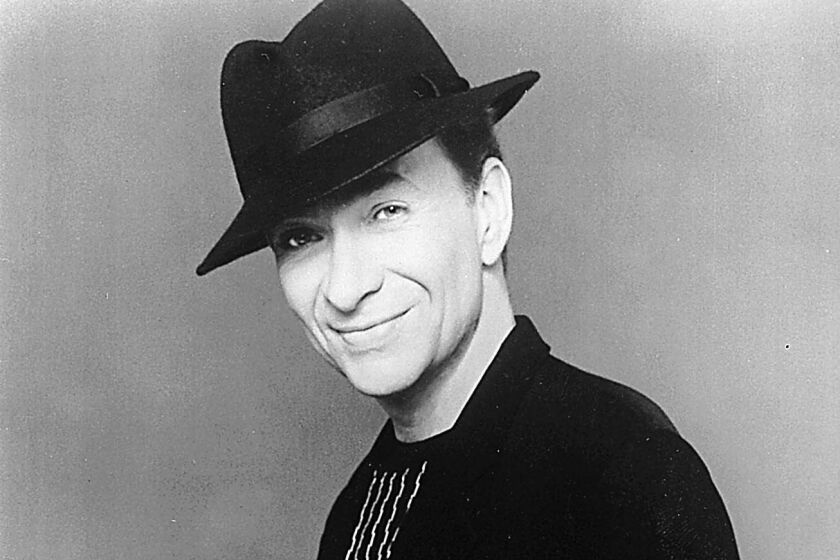
Bobby Caldwell, 1951–2023
Bobby Caldwell was born in Manhattan and raised largely in Miami, and in 1978 released "What You Won't Do for Love" — a record so completely at home in the soul idiom that TK Records marketed it without his photograph, using a silhouette on the sleeve, so that Black radio would play it without hesitation. It worked. A great many listeners assumed for years that he was Black.
That story has been told often enough to become the headline, which slightly obscures the more interesting fact: he was a genuinely excellent singer and songwriter whose catalogue holds up entirely on its own terms. He wrote for Boz Scaggs, Chicago and Peter Cetera, and later in life made several albums of Great American Songbook material.
His influence on hip-hop is enormous. "What You Won't Do for Love" alone has been sampled by Tupac, Common, Aaliyah and dozens of others, and he has a substantial second life in Japan, where his records are a cornerstone of city pop appreciation.
He died in March 2023, having spoken publicly in his final years about the long-term illness he was living with.
What to listen for
"What You Won't Do for Love" is the essential and still remarkable — a horn line, a bassline, and a vocal that sits perfectly between smooth and desperate.
"Open Your Eyes" is the other pillar, and arguably the better song. Common built "The Light" on it, which introduced it to an entirely new audience.
"My Flame" and "Coming Down from Love" are the deep album cuts that collectors prize. "Don't Ask My Neighbor" is an Emotions cover done beautifully.
The standards material — "Beyond the Sea," "Fly Me to the Moon" — shows the later Sinatra-influenced phase, and "Until You Come Back to Me" is the Stevie Wonder song by way of Aretha.
"Game Over" with Jack Splash and Mayer Hawthorne is the late collaboration with a younger generation who grew up on him.
Go deeper
The self-titled 1978 debut is the album. Cat in the Hat (1980) is the follow-up worth finding.
For the wider blue-eyed soul question — and it is a genuinely interesting one — Boz Scaggs' Silk Degrees, Hall & Oates and Ned Doheny occupy the same territory, and all three are beloved in Japan for the same reasons Caldwell is.
For the sampling trail: Common's "The Light," Tupac's "Heaven Ain't Hard 2 Find," and Aaliyah's "I Care 4 U" are the obvious three.
Comments
Post a Comment