
Andre 3000 – New Blue Sun

The most anticipated rap comeback of the century arrived as eighty-seven minutes of flute music. It remains one of the boldest artistic decisions in recent memory.
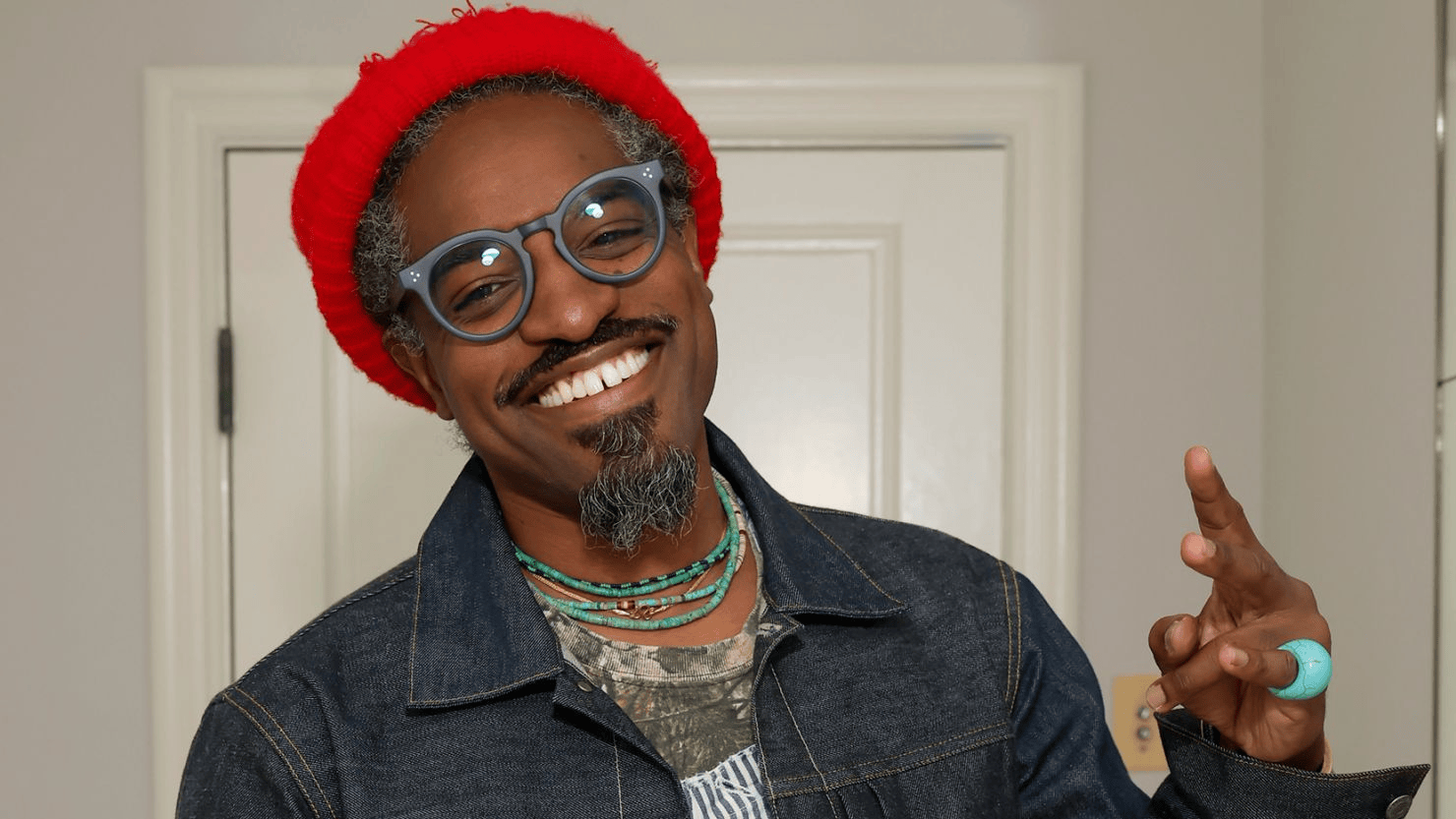

New Blue Sun: the album that refused the assignment

André 3000 had not released a solo album in his entire career. For seventeen years after OutKast, the demand for one had become a running cultural conversation — sightings of him playing flute in airports and parks became internet events. When New Blue Sun was announced in November 2023, the expectation was obvious.

What arrived was an ambient, largely improvised instrumental record built around woodwinds — contrabass flute, Mayan flute, digital wind instruments — with contributions from Carlos Niño, Nate Mercereau, Surya Botofasina and others. No rapping. Not one bar. And to remove any doubt about whether this was an accident, the opening track is titled "I swear, I Really Wanted To Make A 'Rap' Album But This Is Literally The Way The Wind Blew Me This Time."

Why it works

The obvious read is that this is a refusal — an artist declining to perform a younger version of himself. That is true, but it undersells the record. New Blue Sun is genuinely good ambient music, situated in a specific Los Angeles lineage of spiritual jazz and new age that runs through Alice Coltrane and Laraaji, and its collaborators are respected practitioners of exactly that tradition, not session players hired to make a star's side project sound legitimate.

It also went to number one on multiple Billboard charts and earned Grammy nominations, which is a genuinely strange outcome for an eighty-seven-minute flute record and says something about the goodwill André had banked.

What to listen for

The titles are the only place his verbal wit survives, and they are worth reading in full — "That Night In Hawaii When I Turned Into A Panther" and "BuyPoloDisorder's Daughter Wears A 3000® Shirt Embroidered" among them. "Ants To You, Gods To Who?" and the closing "Dreams Once Buried Beneath The Dungeon Floor Slowly Sprout Into Undying Gardens" — a direct nod to Dungeon Family — are the emotional peaks.

Eight tracks, most of them long. Give it the full run, ideally somewhere quiet.

Go deeper

The collaborators are the map. Carlos Niño is the connective figure in Los Angeles' spiritual jazz and ambient scene — his Extra Presence and work with André 3000, Sam Gendel and Jamael Dean all sit in the same world. Surya Botofasina's Ascension Memories comes directly out of Alice Coltrane's ashram community.

Which points to the deepest root: Alice Coltrane. Journey in Satchidananda is the record this whole tradition orbits.

And for the OutKast context, Aquemini remains the group's masterpiece and the best argument for why anyone cared what André did next. That he responded to seventeen years of anticipation with flute music is, on reflection, entirely in character.

Comments

Popular posts from this blog

Monty Alexander VibeZ

There is a moment on almost every Monty Alexander record where the jazz piano trio stops behaving like a jazz piano trio and starts behaving like a Kingston sound system. That moment is the whole point. Fifty tracks deep, this is the sound of a man who never asked permission to be two things at once. The pianist who brought Kingston to the Carnegie stage Monty Alexander was born in Kingston, Jamaica in 1944, and by his teens he was already gigging around the island — close enough to the birth of ska and rocksteady to have absorbed it in his bones rather than learned it from records. He moved to the United States in 1961, and the origin story that follows is the kind that sounds invented: Frank Sinatra heard him playing in a Miami club, and Jilly Rizzo, Sinatra's friend and club owner, put him behind the piano at Jilly's in New York. From there Alexander fell in with Milt Jackson and Ray Brown, two of the most demanding rhythm partners in the music, and never really ...

GuiltyBeatZ VibeZ

If you have danced to anything out of Accra in the last ten years, you have probably danced to GuiltyBeatz without knowing his name. Forty-seven tracks of a producer's fingerprints — and the fingerprints turn out to be the melody. The Ghanaian producer who made Afrobeats swing Ronald Banful, who records as GuiltyBeatz, is a Ghanaian producer and DJ whose sound sits at the crossroads where Ghanaian highlife, Nigerian Afrobeats, amapiano and UK dance music all meet. He came up producing for Mr Eazi — the Banku Music partnership is where a lot of listeners first heard him — and his breakout as a name in his own right came with "Akwaaba," the 2018 track with Mr Eazi, Patapaa and Pappy Kojo that spawned a dance craze and became one of the defining African club records of its year. His reputation went global when he worked on Beyoncé's The Lion King: The Gift , but the more interesting story is the consistency. A GuiltyBeatz beat is usually ide...

Kashif VibeZ

Kashif is the reason a lot of 1980s R&B sounds the way it does — and the reason you can hear the difference between a synth bassline played by someone who understood bass and one programmed by someone who didn't. This is a producer's playlist, and the producer is everywhere. The architect of the synthesized soul record Kashif was born Michael Jones in Brooklyn in 1956, raised in foster care, and taught himself music young enough that by his teens he was touring with B.T. Express. What he did next reshaped a decade. In the early 1980s, as a producer, arranger and multi-instrumentalist, he was among the first to build R&B records around programmed synthesizers — the Minimoog bass, the Linn drum machine, the Fairlight — without letting them sound cold. That distinction matters. Plenty of producers adopted the new gear; Kashif made it groove . His basslines are played with the phrasing of a funk bassist, full of slides and ghost notes, which is why rec...