George Duke played with Frank Zappa and Miles Davis, produced Deniece Williams and Jeffrey Osborne, and wrote some of the most joyful funk of the 1970s. Twenty-nine tracks of a musician who genuinely did everything.
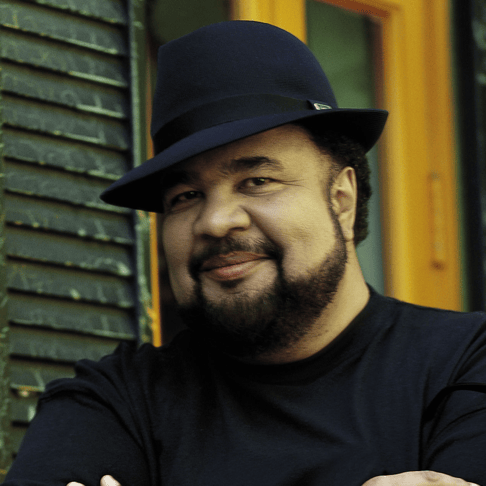
The keyboardist who refused to specialise
George Duke was born in San Rafael, California in 1946 and decided to be a musician after seeing Duke Ellington perform when he was four. He trained seriously in jazz, then spent formative years in Frank Zappa's Mothers of Invention — an education in precision, humour and genre indifference that shaped everything after.
From there: work with Cannonball Adderley and Miles Davis, the long partnership with bassist Stanley Clarke, a run of solo funk and fusion albums, and a second career as one of the most in-demand producers in Black music. He was among the earliest serious adopters of synthesizers in jazz, and he used them like a jazz musician — for colour and voicing rather than novelty.
He died in 2013. The list of musicians who cite him is very long and spans several genres.
What to listen for
"Sweet Baby" and "Touch And Go" with Stanley Clarke are the Clarke/Duke Project material — two virtuosos deliberately making pop records, and succeeding. "No Rhyme, No Reason" is his own best-known vocal.
The production work is where the breadth shows. Deniece Williams' "Black Butterfly" is one of the most beautiful records of the 1980s and arguably his finest hour as a producer. Jeffrey Osborne's "Stay With Me Tonight" is the biggest. A Taste Of Honey's "Sukiyaki" — an English-language reworking of a 1961 Japanese hit — went top three and is one of the strangest success stories in soul.
Phil Perry appears twice, Philip Bailey of Earth, Wind & Fire once, and Chanté Moore's "Precious" represents the 1990s. "Speak Low" is the straight-ahead jazz reminder of where he came from.
Go deeper
Reach for It (1977) and A Brazilian Love Affair (1980) are the two solo albums to own — the latter recorded in Rio with Milton Nascimento and Flora Purim, and one of the great cross-cultural jazz records.
For the Zappa education, The Grand Wazoo and Over-Nite Sensation feature him prominently.
His records have been sampled extensively in hip-hop — Daft Punk, MF DOOM, Common and many others have leaned on his catalogue. If you dig through the samples you end up with a decent Duke primer by accident.
Comments
Post a Comment