Eddie Rockerz VibeZ - curated playlists, mixes and music commentary

Dig the crates

Every playlist on the blog, sorted by where it takes you.

Browse all 600+ VibeZ

DJ Mixes & Series

The house sets, the Producer Series and the running volumes.

Show all 16Show fewer

Billie Eilish VibeZ

Two siblings, a bedroom in Highland Park, and a whisper instead of a belt. Billie Eilish rewrote what a pop vocal could sound like, and thirteen tracks trace it from the first upload to the Oscars.
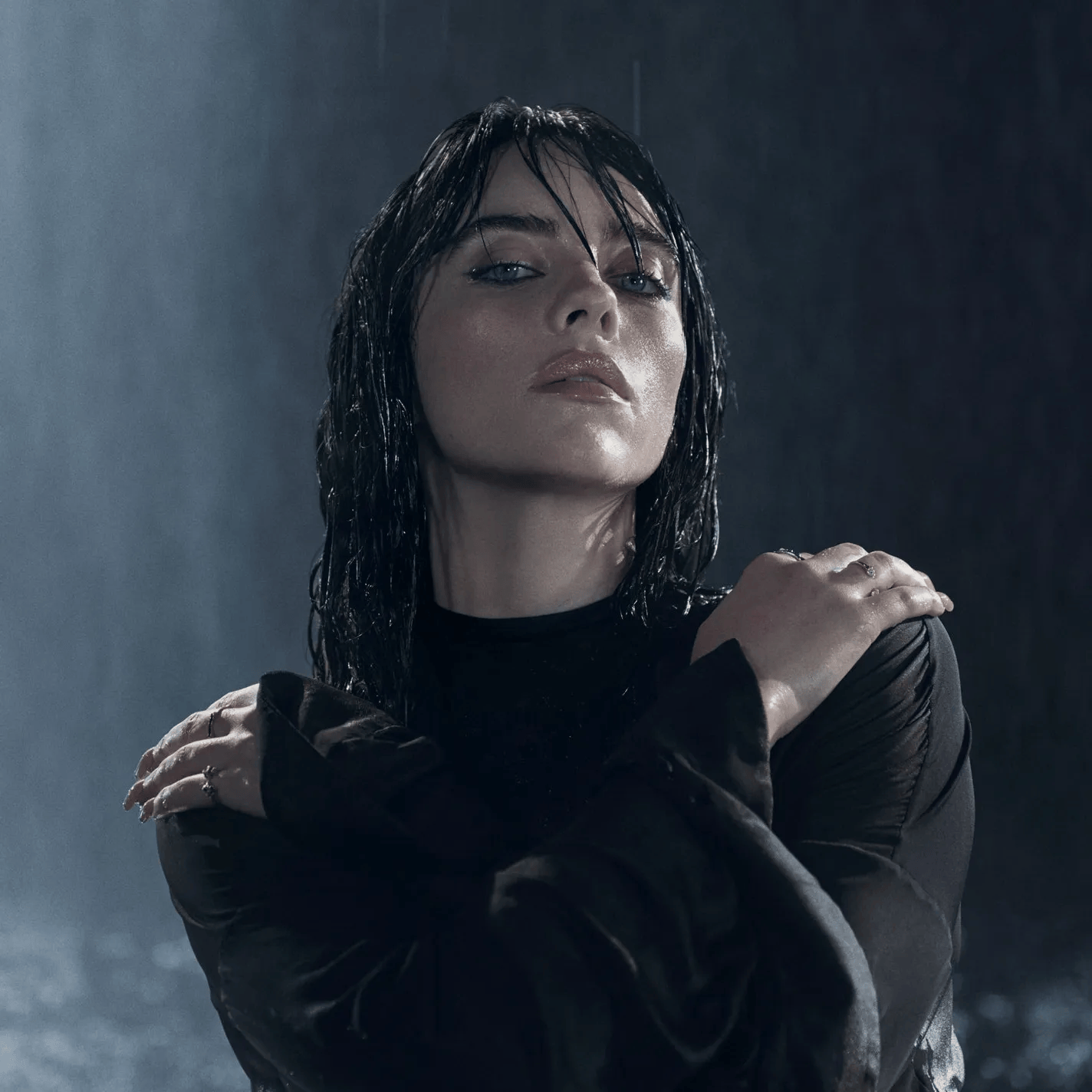

The quietest pop star of her generation

Billie Eilish O'Connell and her brother FINNEAS made "ocean eyes" in a bedroom in Los Angeles and put it on SoundCloud in 2015. She was thirteen. Everything since — the Grammy sweep at nineteen, two Oscars, the stadium tours — has been made by essentially the same two people in essentially the same way.

The innovation was the vocal. Where mainstream pop had spent two decades escalating toward bigger and more athletic singing, Eilish went the opposite direction: close-miked, barely above speech, with the breath and lip noise left in rather than edited out. It reads as intimacy, and it only works because FINNEAS's production is built around it — the arrangements leave holes for a voice that small to fill.

What to listen for

"ocean eyes" and "bellyache" are the early work, and worth hearing next to the later material to appreciate how little the method changed. "when the party's over" is the purest demonstration of the whole approach: voice, piano, silence.

"everything i wanted" — written about a dream involving her brother — is the emotional centre of her catalogue, and "lovely" with Khalid is the one that broke internationally.

"What Was I Made For?" from Barbie won the Academy Award and is a genuinely strange thing to find at the end of a blockbuster: a song about the exhaustion of being looked at, sung almost inaudibly.

The Hit Me Hard and Soft material — "BIRDS OF A FEATHER," "CHIHIRO," "LUNCH," "WILDFLOWER," "SKINNY," "BITTERSUITE" — is where the songwriting got most ambitious, with structures that shift mid-song rather than repeating.

Go deeper

WHEN WE ALL FALL ASLEEP, WHERE DO WE GO? (2019) is the record that changed the landscape, and it should be heard whole — it is sequenced as a single unsettling piece.

FINNEAS's own solo work is worth hearing to understand how much of the sound is his. Their interviews and studio breakdowns are unusually informative about method.

For the lineage: Lana Del Rey is the obvious predecessor in tone and vocal placement, Portishead and Massive Attack in the atmosphere, and Aaliyah in the light, unforced delivery. For where it went next, almost every young pop artist since 2019 has been working somewhere in this shadow.

Comments

Popular posts from this blog

Monty Alexander VibeZ

There is a moment on almost every Monty Alexander record where the jazz piano trio stops behaving like a jazz piano trio and starts behaving like a Kingston sound system. That moment is the whole point. Fifty tracks deep, this is the sound of a man who never asked permission to be two things at once. The pianist who brought Kingston to the Carnegie stage Monty Alexander was born in Kingston, Jamaica in 1944, and by his teens he was already gigging around the island — close enough to the birth of ska and rocksteady to have absorbed it in his bones rather than learned it from records. He moved to the United States in 1961, and the origin story that follows is the kind that sounds invented: Frank Sinatra heard him playing in a Miami club, and Jilly Rizzo, Sinatra's friend and club owner, put him behind the piano at Jilly's in New York. From there Alexander fell in with Milt Jackson and Ray Brown, two of the most demanding rhythm partners in the music, and never really ...

Kashif VibeZ

Kashif is the reason a lot of 1980s R&B sounds the way it does — and the reason you can hear the difference between a synth bassline played by someone who understood bass and one programmed by someone who didn't. This is a producer's playlist, and the producer is everywhere. The architect of the synthesized soul record Kashif was born Michael Jones in Brooklyn in 1956, raised in foster care, and taught himself music young enough that by his teens he was touring with B.T. Express. What he did next reshaped a decade. In the early 1980s, as a producer, arranger and multi-instrumentalist, he was among the first to build R&B records around programmed synthesizers — the Minimoog bass, the Linn drum machine, the Fairlight — without letting them sound cold. That distinction matters. Plenty of producers adopted the new gear; Kashif made it groove . His basslines are played with the phrasing of a funk bassist, full of slides and ghost notes, which is why rec...

De La Soul VibeZ (R.I.P Trugoy the Dove)

Trugoy the Dove died in February 2023, weeks before De La Soul's catalogue finally reached streaming after a fifteen-year legal deadlock. Thirty-one tracks, and a difficult kind of timing. Rest in peace, Dave David Jude Jolicoeur — Trugoy the Dove, later just Dave — formed De La Soul in Amityville, Long Island with Posdnuos and Maseo. Their 1989 debut 3 Feet High and Rising , produced with Prince Paul , remains one of the most inventive records in the history of the genre: dense with samples from Steely Dan to Johnny Cash to French language instruction tapes, funny, formally strange, and entirely uninterested in the postures rap was expected to strike. The consequence of that invention was a curse. The sample clearance landscape changed after Gilbert O'Sullivan sued Biz Markie in 1991, and De La Soul's early catalogue — built on hundreds of uncleared fragments — became legally impossible to license. For roughly fifteen years, their most important a...