A voice that arrives like a weather front, and songs built to be shouted from a hilltop. Iniko made two of the most arresting viral records of recent years, and neither sounds like anything else.
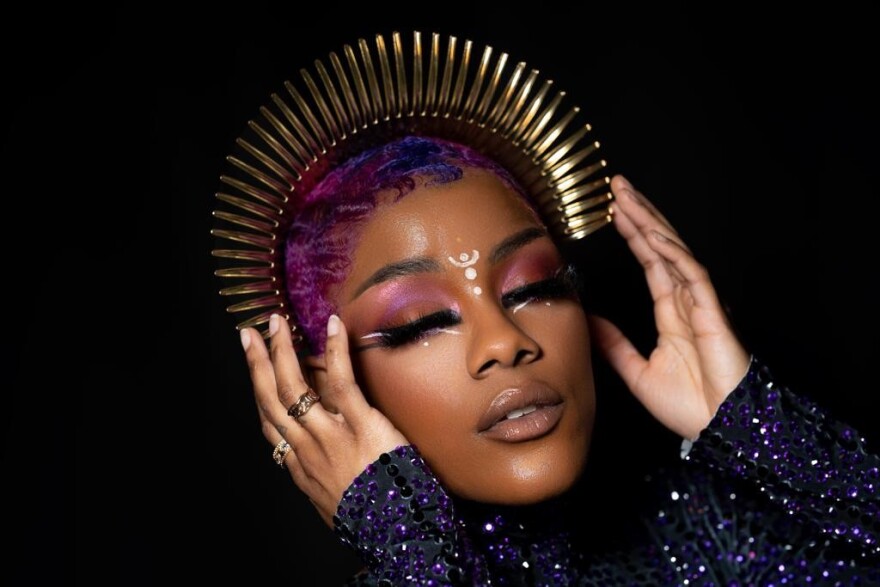
Brooklyn, Jamaica, and a voice with no obvious peer
Iniko is a singer-songwriter from Brooklyn, born in 1996 to Afro-Jamaican heritage — their father, Max Dixon, was a reggae musician. Iniko identifies as genderless and uses they/them pronouns, and has spoken openly about growing up in an Independent Fundamental Baptist environment and the religious trauma that followed. That history is not incidental to the music; a great deal of it is about escape, defiance and self-authorship.
Their rise came through TikTok, where "The King's Affirmation" went viral in 2021, followed by "Jericho" — which debuted at number 11 on Billboard's R&B Digital Song Sales chart and earned Gold certification in the US and Silver in the UK. A 2024 GLAAD Media Award nomination for Outstanding Breakthrough Music Artist followed, and the debut album The Awakening arrived in January 2025.
What to listen for
"Jericho" is the entry point and remains extraordinary — a slow, stalking verse that opens into a chorus with the scale of a film score. The biblical framing is doing real work: Jericho is the city whose walls came down, and the song is about being the thing that brings them down.
"The King's Affirmation" is the other pillar, and the one that reveals the vocal control — Iniko's lower register is unusually dark for a pop record, and the contrast when they open up is the whole effect.
"Armor" and "Kingdom" work the same territory of self-protection and self-crowning. "Hourglass" — here in two versions — is the most vulnerable thing on the list.
"Yosemite (Song For The Ahwahnechee)" is the one to sit with. It is written for the Indigenous people displaced from the valley that became the national park, and it is the clearest signal that Iniko's interests run wider than personal catharsis.
Go deeper
The Awakening (2025) is the album, and it includes reimagined covers alongside originals — a good indication of how they think about interpretation.
For adjacent artists: Ibeyi share the ritual quality and the diasporic frame; Arlo Parks and Rina Sawayama the willingness to write directly about identity and harm; Hozier the biblical vocabulary put to non-religious ends.
And for the vocal itself — the resonance, the theatrical scale — the obvious ancestors are Nina Simone and Tracy Chapman. Both built careers on a low voice used with total precision. Iniko is working in that line.
Comments
Post a Comment