
Producer Series: Tim & Bob

Thirty-one tracks from a production duo who wrote "Thong Song" and "So Into You" and somehow made both sound inevitable.
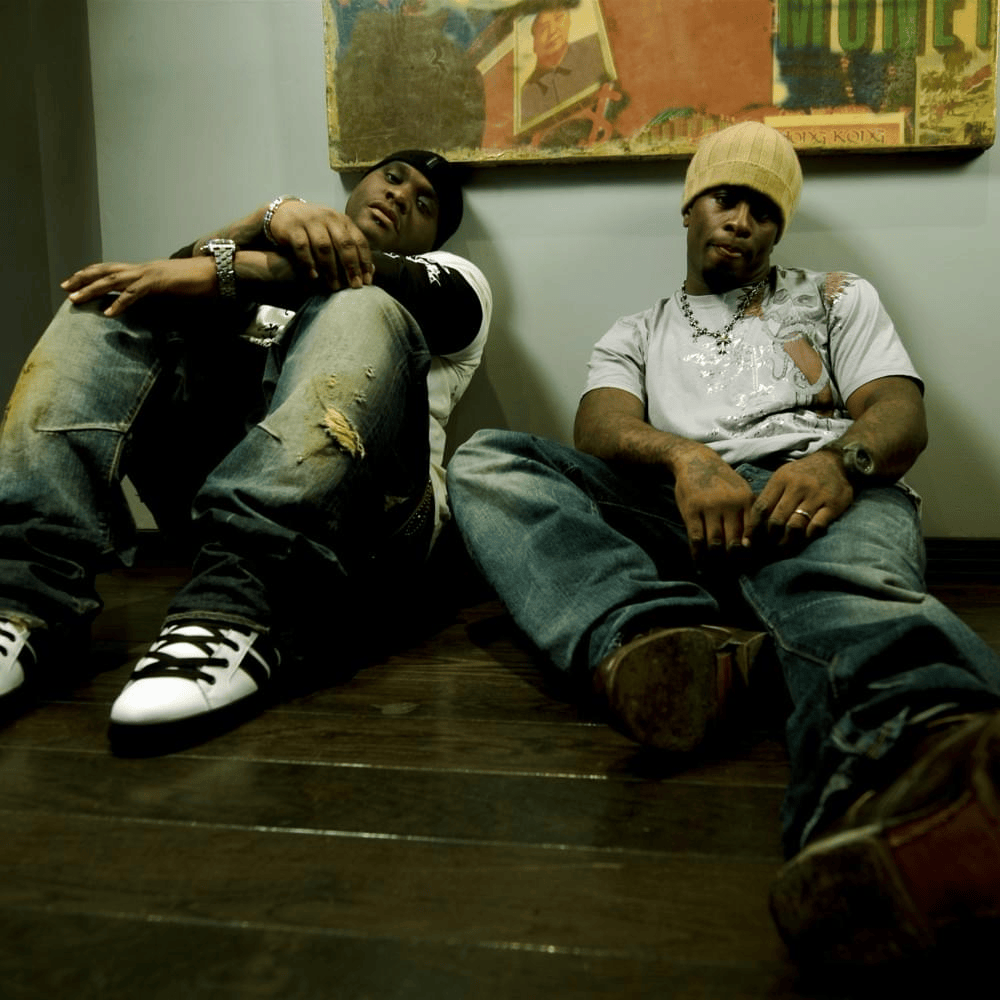

Tim & Bob, the quiet 1990s workhorses

Tim Kelley and Bob Robinson spent the 1990s and early 2000s as one of the most reliable production teams in R&B without ever becoming public figures. Their records are recognisable by their construction rather than by a signature sound: warm keyboards, a bassline with genuine melodic movement, and an arrangement that leaves the singer plenty of room.

What is striking about their catalogue is the breadth of voices they served. Boyz II Men, Tamia, Brian McKnight, Case, The Isley Brothers, Monica, 112, Dave Hollister — and Sisqó. Very few producers could handle both a five-part harmony group and a novelty smash without one undermining the other.

What to listen for

Tamia's "So Into You" is the masterpiece. It has been covered and interpolated repeatedly — Fabolous built a hit on it, and Tamia herself recut it — and the original remains one of the most perfectly weighted R&B records of the decade. Listen to how much space is left around her voice.

Boyz II Men's "Vibin'" is the other pillar, and a much funkier record than the group's ballad reputation suggests.

Sisqó's "Thong Song" is on this list for good reason. It is a genuinely well-made record — that string arrangement is doing real work, the vocal arrangement is a Dru Hill man showing off, and it was inescapable for a year. Novelty is not the same as badly made.

Case's "Missing You" and Dave Hollister's "We've Come Too Far" and "Take Care Of Home" are the deep grown-folks cuts. Jon B.'s "They Don't Know" is the crossover.

Deborah Cox's "Just Be Good to Me" reworks the S.O.S. Band, and The Isley Brothers' "I Want That" shows them working with genuine royalty. Joe and Nas's "Get To Know Me" is the rap-R&B one.

Go deeper

Tamia's self-titled debut and Dave Hollister's Ghetto Hymns are the albums where their work is most concentrated.

For the wider late-1990s R&B production landscape, the names to know alongside them are Rodney Jerkins, Jimmy Jam and Terry Lewis, Timbaland and She'kspere. Between them they built the sound of an entire decade of radio.

And Kevon Edmonds — who appears here with "When I'm With You" — is Babyface's brother and was in After 7. The family tree of 1990s R&B is smaller than it looks.

Comments

Popular posts from this blog

Monty Alexander VibeZ

There is a moment on almost every Monty Alexander record where the jazz piano trio stops behaving like a jazz piano trio and starts behaving like a Kingston sound system. That moment is the whole point. Fifty tracks deep, this is the sound of a man who never asked permission to be two things at once. The pianist who brought Kingston to the Carnegie stage Monty Alexander was born in Kingston, Jamaica in 1944, and by his teens he was already gigging around the island — close enough to the birth of ska and rocksteady to have absorbed it in his bones rather than learned it from records. He moved to the United States in 1961, and the origin story that follows is the kind that sounds invented: Frank Sinatra heard him playing in a Miami club, and Jilly Rizzo, Sinatra's friend and club owner, put him behind the piano at Jilly's in New York. From there Alexander fell in with Milt Jackson and Ray Brown, two of the most demanding rhythm partners in the music, and never really ...

GuiltyBeatZ VibeZ

If you have danced to anything out of Accra in the last ten years, you have probably danced to GuiltyBeatz without knowing his name. Forty-seven tracks of a producer's fingerprints — and the fingerprints turn out to be the melody. The Ghanaian producer who made Afrobeats swing Ronald Banful, who records as GuiltyBeatz, is a Ghanaian producer and DJ whose sound sits at the crossroads where Ghanaian highlife, Nigerian Afrobeats, amapiano and UK dance music all meet. He came up producing for Mr Eazi — the Banku Music partnership is where a lot of listeners first heard him — and his breakout as a name in his own right came with "Akwaaba," the 2018 track with Mr Eazi, Patapaa and Pappy Kojo that spawned a dance craze and became one of the defining African club records of its year. His reputation went global when he worked on Beyoncé's The Lion King: The Gift , but the more interesting story is the consistency. A GuiltyBeatz beat is usually ide...

Kashif VibeZ

Kashif is the reason a lot of 1980s R&B sounds the way it does — and the reason you can hear the difference between a synth bassline played by someone who understood bass and one programmed by someone who didn't. This is a producer's playlist, and the producer is everywhere. The architect of the synthesized soul record Kashif was born Michael Jones in Brooklyn in 1956, raised in foster care, and taught himself music young enough that by his teens he was touring with B.T. Express. What he did next reshaped a decade. In the early 1980s, as a producer, arranger and multi-instrumentalist, he was among the first to build R&B records around programmed synthesizers — the Minimoog bass, the Linn drum machine, the Fairlight — without letting them sound cold. That distinction matters. Plenty of producers adopted the new gear; Kashif made it groove . His basslines are played with the phrasing of a funk bassist, full of slides and ghost notes, which is why rec...