
Best of Prince’s Proteges

Twenty-two tracks he wrote, produced, played on or simply willed into existence for somebody else. Prince's second career was making other people famous.
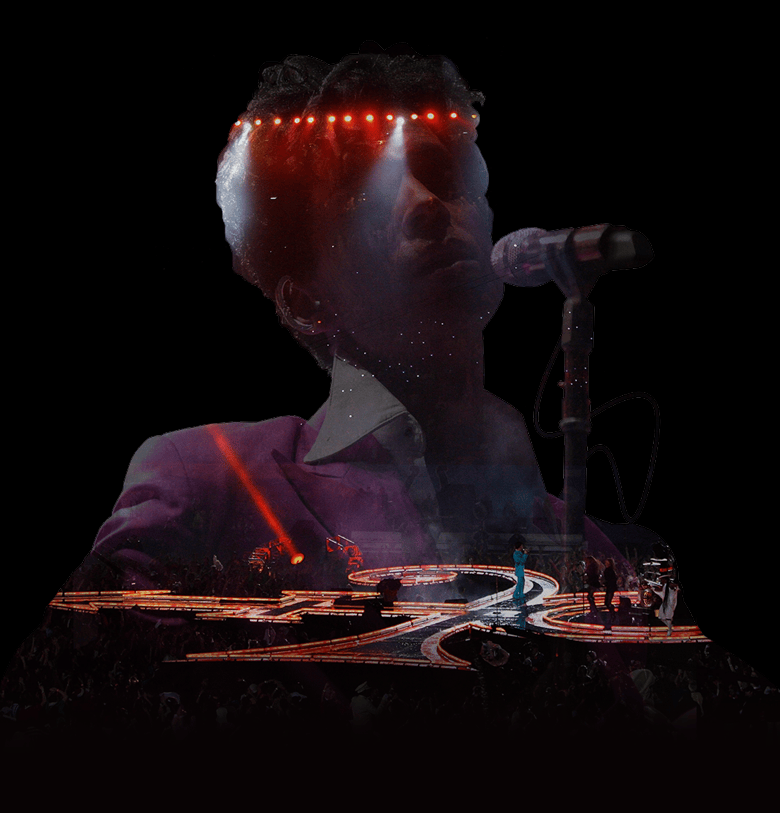

The Minneapolis machine

Prince's productivity was such that his own albums could not absorb it, so he built an ecosystem instead. The Time, Vanity 6, Apollonia 6, Sheila E., The Family, Jill Jones, Taja Sevelle, Madhouse — most of these acts existed because he wanted somewhere to put songs.

He often wrote, arranged and played nearly everything himself, then handed the results to a front person, frequently under a pseudonym: Jamie Starr, Christopher, Alexander Nevermind, Joey Coco. Several of the biggest hits of the 1980s are Prince records that nobody knew were Prince records at the time.

What to listen for

The Time's "777-9311" is the one musicians talk about — that bassline is Prince, played on a synth, and it is one of the most technically absurd things in funk. "Jungle Love," "Cool," "Get It Up," "Wild and Loose" and "Ice Cream Castles" complete the Time selections.

Sheena Easton's "Sugar Walls" was written by Prince as "Alexander Nevermind" and was one of the records that prompted the formation of the PMRC and the eventual parental advisory sticker.

The Bangles' "Manic Monday" was a Prince song given away under the name "Christopher," and it went to number two — kept off the top by "Kiss."

Chaka Khan's "I Feel for You" is a Prince composition from his own 1979 album, transformed by Arif Mardin, Melle Mel and Stevie Wonder's harmonica into something else entirely.

Sheila E.'s "The Glamorous Life" and "A Love Bizarre" are the drummer-bandleader records, and Jody Watley, Wendy & Lisa, Jesse Johnson, André Cymone and Nona Hendryx map the wider orbit.

Alicia Keys' "How Come You Don't Call Me" and Janelle Monáe's "Neon Valley Street" are the later generations paying the debt.

Go deeper

The Time's What Time Is It? (1982) is the essential protege album and one of the funkiest records ever made.

Sheila E.'s The Glamorous Life and The Family's self-titled album — which contains the original "Nothing Compares 2 U" — are the other two to find.

And for how deep this goes: Sinéad O'Connor, Martika, Kenny Rogers and Stevie Nicks all had hits with Prince material. The man gave away songs most writers would build a career on.

Comments

Popular posts from this blog

Monty Alexander VibeZ

There is a moment on almost every Monty Alexander record where the jazz piano trio stops behaving like a jazz piano trio and starts behaving like a Kingston sound system. That moment is the whole point. Fifty tracks deep, this is the sound of a man who never asked permission to be two things at once. The pianist who brought Kingston to the Carnegie stage Monty Alexander was born in Kingston, Jamaica in 1944, and by his teens he was already gigging around the island — close enough to the birth of ska and rocksteady to have absorbed it in his bones rather than learned it from records. He moved to the United States in 1961, and the origin story that follows is the kind that sounds invented: Frank Sinatra heard him playing in a Miami club, and Jilly Rizzo, Sinatra's friend and club owner, put him behind the piano at Jilly's in New York. From there Alexander fell in with Milt Jackson and Ray Brown, two of the most demanding rhythm partners in the music, and never really ...

GuiltyBeatZ VibeZ

If you have danced to anything out of Accra in the last ten years, you have probably danced to GuiltyBeatz without knowing his name. Forty-seven tracks of a producer's fingerprints — and the fingerprints turn out to be the melody. The Ghanaian producer who made Afrobeats swing Ronald Banful, who records as GuiltyBeatz, is a Ghanaian producer and DJ whose sound sits at the crossroads where Ghanaian highlife, Nigerian Afrobeats, amapiano and UK dance music all meet. He came up producing for Mr Eazi — the Banku Music partnership is where a lot of listeners first heard him — and his breakout as a name in his own right came with "Akwaaba," the 2018 track with Mr Eazi, Patapaa and Pappy Kojo that spawned a dance craze and became one of the defining African club records of its year. His reputation went global when he worked on Beyoncé's The Lion King: The Gift , but the more interesting story is the consistency. A GuiltyBeatz beat is usually ide...

Kashif VibeZ

Kashif is the reason a lot of 1980s R&B sounds the way it does — and the reason you can hear the difference between a synth bassline played by someone who understood bass and one programmed by someone who didn't. This is a producer's playlist, and the producer is everywhere. The architect of the synthesized soul record Kashif was born Michael Jones in Brooklyn in 1956, raised in foster care, and taught himself music young enough that by his teens he was touring with B.T. Express. What he did next reshaped a decade. In the early 1980s, as a producer, arranger and multi-instrumentalist, he was among the first to build R&B records around programmed synthesizers — the Minimoog bass, the Linn drum machine, the Fairlight — without letting them sound cold. That distinction matters. Plenty of producers adopted the new gear; Kashif made it groove . His basslines are played with the phrasing of a funk bassist, full of slides and ghost notes, which is why rec...