
Classic Recordings: “I AM” – Earth, Wind & Fire

Nine tracks containing one of the greatest ballads ever written and one of the greatest party records ever made. I Am is Earth, Wind & Fire at their commercial peak.
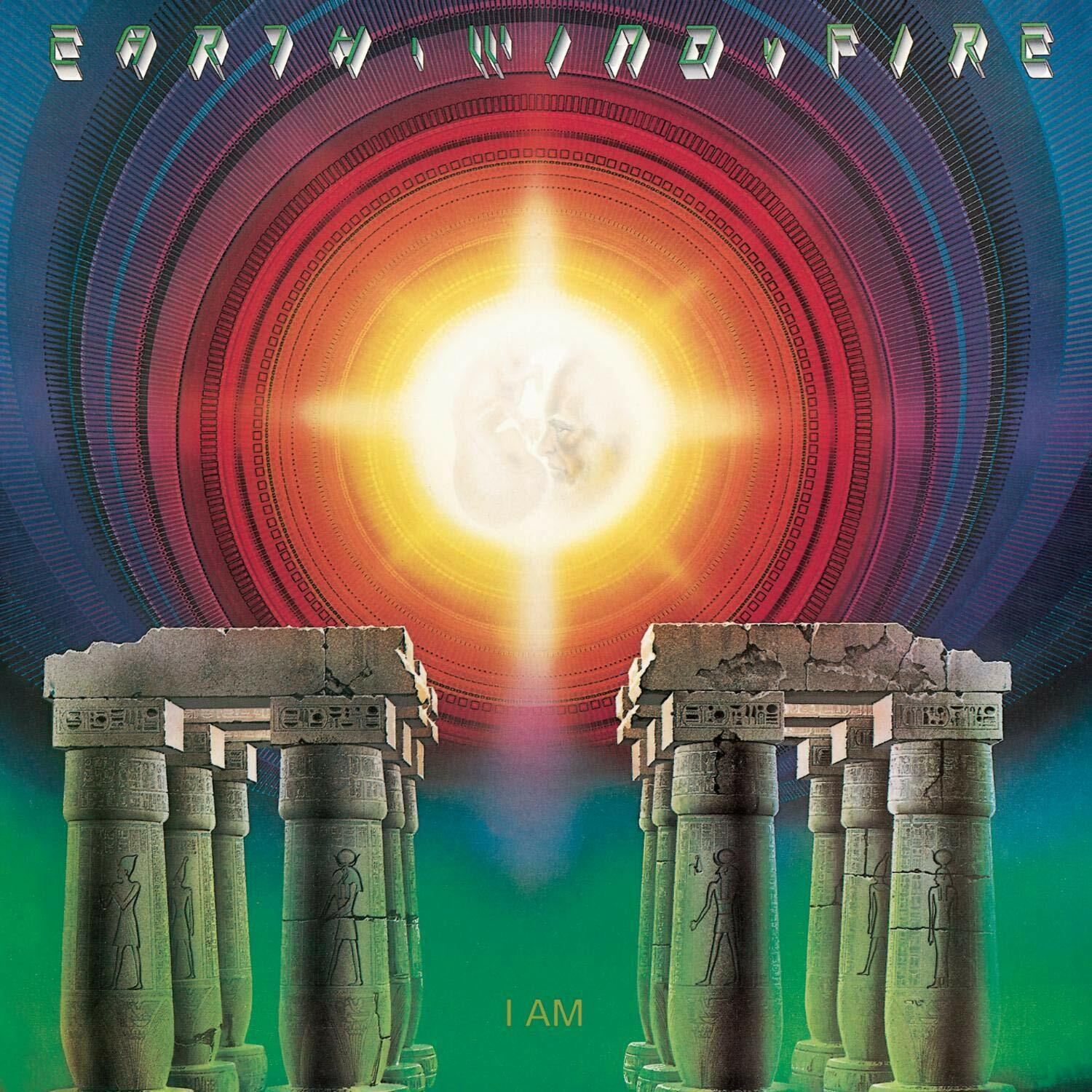

I Am, 1979

By 1979 Earth, Wind & Fire were among the biggest acts in the world, and I Am is the sound of a band operating with total confidence and considerable outside help. Maurice White co-wrote much of it with David Foster — then an ascendant arranger and producer — and the collaboration pushed the band toward a slicker, more melodically direct sound than the mystical sprawl of All 'n All.

Some purists prefer the earlier records for exactly that reason. But I Am contains two of the most durable songs in the American catalogue, and the musicianship never slackens.

What to listen for

"After the Love Has Gone" is the ballad, written by David Foster, Jay Graydon and Bill Champlin. It won a Grammy, and it is one of the most harmonically sophisticated songs to reach the pop top ten — the chord movement under the bridge is genuinely unusual. Philip Bailey's falsetto on it is the definitive performance of his career.

"Boogie Wonderland" with The Emotions is the other monument — a disco record made by a band who were not really a disco band, and one of the most joyful things ever committed to tape. The horn arrangement alone is worth the album.

"In the Stone" opens the record with a full orchestral fanfare before the groove arrives, which tells you exactly how confident this band was.

"Star" and "Let Your Feelings Show" are the underrated up-tempo cuts, and "Can't Let Go" and "Wait" are the deep album tracks most people have never heard.

"You and I" closes on the spiritual note the band always returned to.

Listen throughout to the Phenix Horns. Their arrangements — largely by Tom Tom 84 — are among the most sophisticated in popular music, and they later played on Phil Collins records for exactly that reason.

Go deeper

All 'n All (1977) and That's the Way of the World (1975) are the two albums to hear alongside this one.

The Emotions deserve their own investigation — "Best of My Love," produced by Maurice White, is one of the great records of the 1970s.

And David Foster's career is a story in itself: from this to Chicago to Whitney Houston to Céline Dion, he became the defining ballad architect of the following two decades.

Comments

Popular posts from this blog

Monty Alexander VibeZ

There is a moment on almost every Monty Alexander record where the jazz piano trio stops behaving like a jazz piano trio and starts behaving like a Kingston sound system. That moment is the whole point. Fifty tracks deep, this is the sound of a man who never asked permission to be two things at once. The pianist who brought Kingston to the Carnegie stage Monty Alexander was born in Kingston, Jamaica in 1944, and by his teens he was already gigging around the island — close enough to the birth of ska and rocksteady to have absorbed it in his bones rather than learned it from records. He moved to the United States in 1961, and the origin story that follows is the kind that sounds invented: Frank Sinatra heard him playing in a Miami club, and Jilly Rizzo, Sinatra's friend and club owner, put him behind the piano at Jilly's in New York. From there Alexander fell in with Milt Jackson and Ray Brown, two of the most demanding rhythm partners in the music, and never really ...

GuiltyBeatZ VibeZ

If you have danced to anything out of Accra in the last ten years, you have probably danced to GuiltyBeatz without knowing his name. Forty-seven tracks of a producer's fingerprints — and the fingerprints turn out to be the melody. The Ghanaian producer who made Afrobeats swing Ronald Banful, who records as GuiltyBeatz, is a Ghanaian producer and DJ whose sound sits at the crossroads where Ghanaian highlife, Nigerian Afrobeats, amapiano and UK dance music all meet. He came up producing for Mr Eazi — the Banku Music partnership is where a lot of listeners first heard him — and his breakout as a name in his own right came with "Akwaaba," the 2018 track with Mr Eazi, Patapaa and Pappy Kojo that spawned a dance craze and became one of the defining African club records of its year. His reputation went global when he worked on Beyoncé's The Lion King: The Gift , but the more interesting story is the consistency. A GuiltyBeatz beat is usually ide...

Kashif VibeZ

Kashif is the reason a lot of 1980s R&B sounds the way it does — and the reason you can hear the difference between a synth bassline played by someone who understood bass and one programmed by someone who didn't. This is a producer's playlist, and the producer is everywhere. The architect of the synthesized soul record Kashif was born Michael Jones in Brooklyn in 1956, raised in foster care, and taught himself music young enough that by his teens he was touring with B.T. Express. What he did next reshaped a decade. In the early 1980s, as a producer, arranger and multi-instrumentalist, he was among the first to build R&B records around programmed synthesizers — the Minimoog bass, the Linn drum machine, the Fairlight — without letting them sound cold. That distinction matters. Plenty of producers adopted the new gear; Kashif made it groove . His basslines are played with the phrasing of a funk bassist, full of slides and ghost notes, which is why rec...