
Amber Mark VibeZ

She started making music to process her mother's death and ended up with one of the most quietly adventurous catalogues in modern R&B. Twenty-seven tracks of Amber Mark.
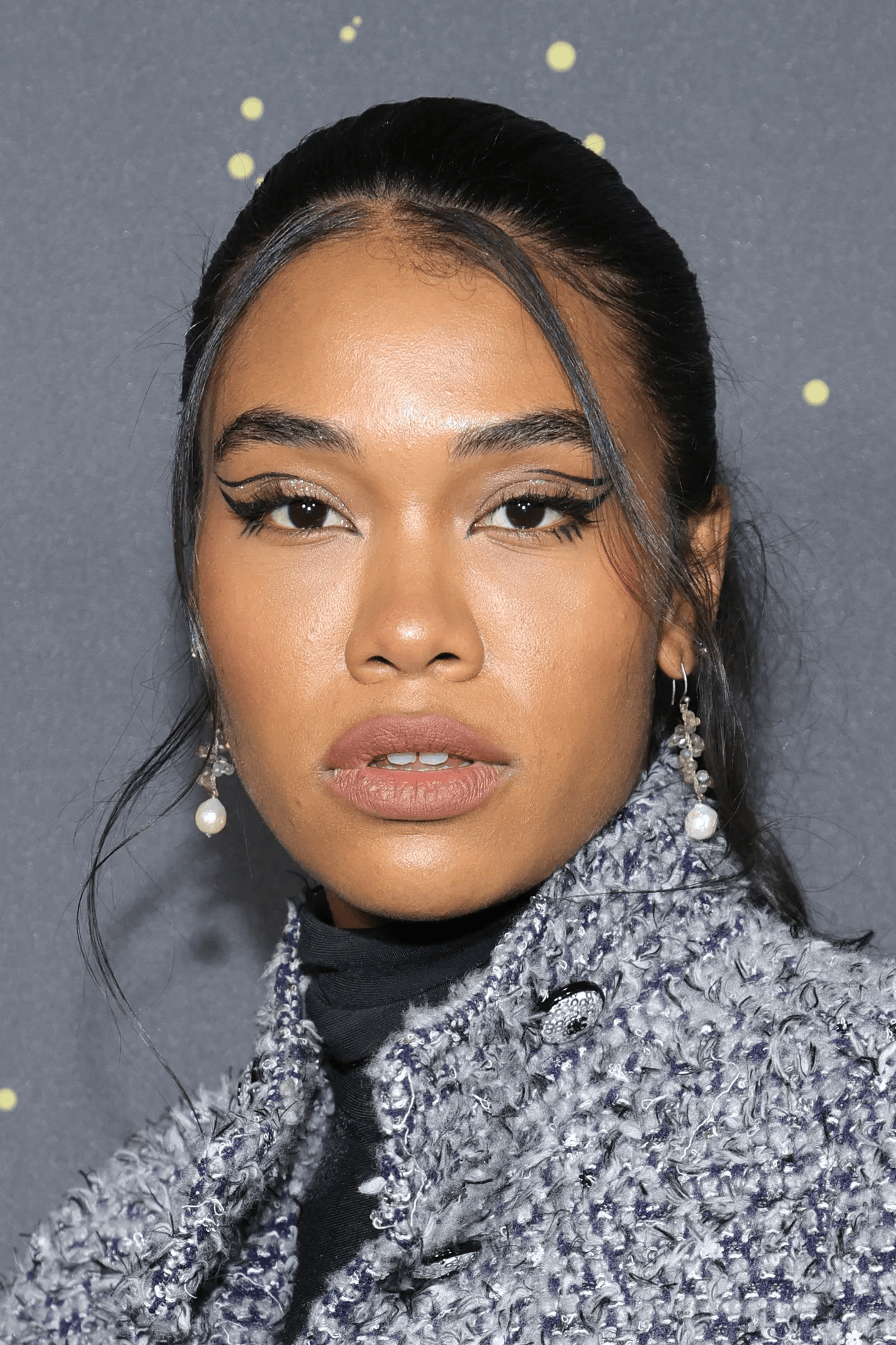

Grief, travel, and a very wide record collection

Amber Mark was born in Tennessee and raised largely on the move — her mother, the artist Mia Mark, took her through India, Nepal, Thailand, Germany and beyond. That upbringing is audible: her records draw on Brazilian rhythm, Indian percussion, house, gospel and straight R&B without any of it registering as tourism.

Her first EP, 3:33am, was written after her mother's death in 2013, and the whole project is structured around that loss. It is a remarkable debut precisely because it is not maudlin — several of the songs are danceable, and the grief sits underneath rather than on top.

What to listen for

"Monsoon" is the song to start with. Credited to Amber Mark and Mia Mark, it incorporates her mother directly, and the Indian percussion and the melody are inseparable from what the song is about.

"Love Is Stronger Than Pride" is the Sade cover and one of the best in existence — she takes it somewhere considerably more percussive and unresolved.

"Heart-Shaped Box" is the Nirvana song, reimagined as slow, sultry R&B, and it should not work at all.

"Most Men" is the sharpest lyric here, and "Worth It" and "What It Is" are the most immediate.

"1894" and "Healing Hurts" come from the more introspective end. "Softly" is the biggest and appears here twice, including a remix by Nigerian DJ Cuppy.

"Fate" with John Legend and "I Get By" with DJDS and Vory show how easily her voice sits in other people's productions.

Go deeper

3:33am (2017) is the EP and the essential listen — short, coherent, and unlike anything else released that year. Three Dimensions Deep (2022) is the full album, structured in three parts around questions of self and cosmos, and considerably more ambitious than most major-label R&B.

For adjacent artists: Sen Morimoto, UMI and Nao all work in similar territory — genre-agnostic, harmonically curious, resistant to easy filing.

And for the Brazilian element she draws on, Marcos Valle, Joyce and Elis Regina are the doorways. That rhythmic sensibility runs through a surprising amount of modern R&B once you start listening for it.

A final thought on the covers. Choosing "Heart-Shaped Box" and "Love Is Stronger Than Pride" for the same catalogue tells you a great deal about how Amber Mark hears music — not as a set of genres to move between but as a single field where a Nirvana song and a Sade song are the same kind of object. That instinct is what makes her records feel coherent despite drawing on four continents' worth of rhythm, and it is the thing to listen for across the whole playlist.

Comments

Popular posts from this blog

Monty Alexander VibeZ

There is a moment on almost every Monty Alexander record where the jazz piano trio stops behaving like a jazz piano trio and starts behaving like a Kingston sound system. That moment is the whole point. Fifty tracks deep, this is the sound of a man who never asked permission to be two things at once. The pianist who brought Kingston to the Carnegie stage Monty Alexander was born in Kingston, Jamaica in 1944, and by his teens he was already gigging around the island — close enough to the birth of ska and rocksteady to have absorbed it in his bones rather than learned it from records. He moved to the United States in 1961, and the origin story that follows is the kind that sounds invented: Frank Sinatra heard him playing in a Miami club, and Jilly Rizzo, Sinatra's friend and club owner, put him behind the piano at Jilly's in New York. From there Alexander fell in with Milt Jackson and Ray Brown, two of the most demanding rhythm partners in the music, and never really ...

GuiltyBeatZ VibeZ

If you have danced to anything out of Accra in the last ten years, you have probably danced to GuiltyBeatz without knowing his name. Forty-seven tracks of a producer's fingerprints — and the fingerprints turn out to be the melody. The Ghanaian producer who made Afrobeats swing Ronald Banful, who records as GuiltyBeatz, is a Ghanaian producer and DJ whose sound sits at the crossroads where Ghanaian highlife, Nigerian Afrobeats, amapiano and UK dance music all meet. He came up producing for Mr Eazi — the Banku Music partnership is where a lot of listeners first heard him — and his breakout as a name in his own right came with "Akwaaba," the 2018 track with Mr Eazi, Patapaa and Pappy Kojo that spawned a dance craze and became one of the defining African club records of its year. His reputation went global when he worked on Beyoncé's The Lion King: The Gift , but the more interesting story is the consistency. A GuiltyBeatz beat is usually ide...

Kashif VibeZ

Kashif is the reason a lot of 1980s R&B sounds the way it does — and the reason you can hear the difference between a synth bassline played by someone who understood bass and one programmed by someone who didn't. This is a producer's playlist, and the producer is everywhere. The architect of the synthesized soul record Kashif was born Michael Jones in Brooklyn in 1956, raised in foster care, and taught himself music young enough that by his teens he was touring with B.T. Express. What he did next reshaped a decade. In the early 1980s, as a producer, arranger and multi-instrumentalist, he was among the first to build R&B records around programmed synthesizers — the Minimoog bass, the Linn drum machine, the Fairlight — without letting them sound cold. That distinction matters. Plenty of producers adopted the new gear; Kashif made it groove . His basslines are played with the phrasing of a funk bassist, full of slides and ghost notes, which is why rec...