
Classic Recordings: Kirk Whalum – The Gospel According to Jazz (Selected Hits)

Fifteen tracks from a saxophonist who decided that the church and the jazz club were the same building. Kirk Whalum's Gospel According to Jazz is a genuine project, not a genre exercise.
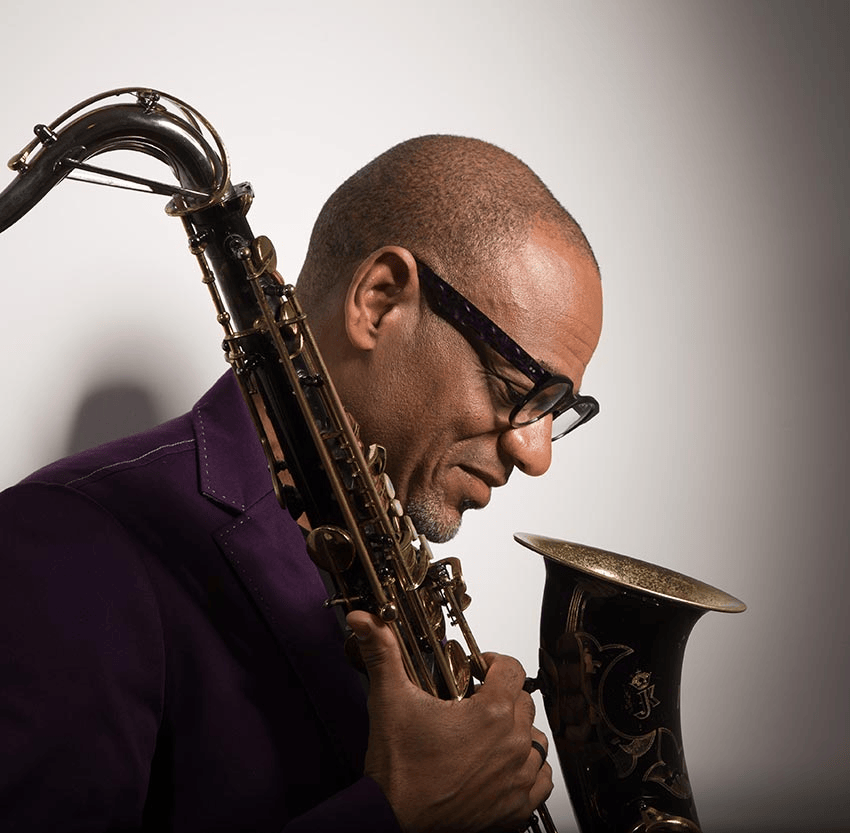

The Gospel According to Jazz

Kirk Whalum is from Memphis, the son and grandson of Baptist ministers, and his uncle was the gospel singer Hugh "Peanuts" Whalum — who appears on this playlist. That lineage is the whole point of the series he began in 1998 and has continued across multiple volumes: a deliberate attempt to bring jazz improvisation and gospel worship into the same room, recorded live in churches with a full band and congregation.

Whalum is better known to most listeners as the saxophone solo on Whitney Houston's "I Will Always Love You" — one of the most-heard instrumental performances in pop history. He has also worked extensively with Bob James, Luther Vandross and Quincy Jones, and won a Grammy for a later volume of this series.

What to listen for

The live recordings are the heart of it. "Thy Kingdom Come" was recorded at West Angeles Cathedral in Los Angeles, one of the great gospel churches, and the room is audible throughout.

The Smile Medley is the emotional centre — Charlie Chaplin's "Smile" running into the spiritual "God Has Smiled on Me," with his uncle Peanuts Whalum singing. It is a family document as much as a musical one.

"Make Me a Believer" and "It's What I Do" feature Lalah Hathaway, and hearing her in a church setting with a live band is worth the price of admission on its own.

"Because You Loved Me" with George Duke is the jazz summit, and "Sometimes I Feel Like a Motherless Child" and "Wade In the Water" are the spirituals — both songs that carry coded histories of escape, and both treated with the seriousness that implies.

"Avé Maria" is the outlier and shows the classical training.

Go deeper

The later volumes of the series — particularly The Gospel According to Jazz, Chapter III, which won a Grammy — are worth hearing in sequence.

For the tradition of jazz musicians engaging seriously with the church: Duke Ellington's Sacred Concerts, John Coltrane's A Love Supreme, Mary Lou Williams' masses, and Charles Mingus. This is one of the deepest seams in American music and it is routinely overlooked.

And for Memphis: the city's musical history — Stax, Sun, Hi Records, and the churches that fed all three — is inseparable from what Whalum does.

Comments

Popular posts from this blog

Monty Alexander VibeZ

There is a moment on almost every Monty Alexander record where the jazz piano trio stops behaving like a jazz piano trio and starts behaving like a Kingston sound system. That moment is the whole point. Fifty tracks deep, this is the sound of a man who never asked permission to be two things at once. The pianist who brought Kingston to the Carnegie stage Monty Alexander was born in Kingston, Jamaica in 1944, and by his teens he was already gigging around the island — close enough to the birth of ska and rocksteady to have absorbed it in his bones rather than learned it from records. He moved to the United States in 1961, and the origin story that follows is the kind that sounds invented: Frank Sinatra heard him playing in a Miami club, and Jilly Rizzo, Sinatra's friend and club owner, put him behind the piano at Jilly's in New York. From there Alexander fell in with Milt Jackson and Ray Brown, two of the most demanding rhythm partners in the music, and never really ...

GuiltyBeatZ VibeZ

If you have danced to anything out of Accra in the last ten years, you have probably danced to GuiltyBeatz without knowing his name. Forty-seven tracks of a producer's fingerprints — and the fingerprints turn out to be the melody. The Ghanaian producer who made Afrobeats swing Ronald Banful, who records as GuiltyBeatz, is a Ghanaian producer and DJ whose sound sits at the crossroads where Ghanaian highlife, Nigerian Afrobeats, amapiano and UK dance music all meet. He came up producing for Mr Eazi — the Banku Music partnership is where a lot of listeners first heard him — and his breakout as a name in his own right came with "Akwaaba," the 2018 track with Mr Eazi, Patapaa and Pappy Kojo that spawned a dance craze and became one of the defining African club records of its year. His reputation went global when he worked on Beyoncé's The Lion King: The Gift , but the more interesting story is the consistency. A GuiltyBeatz beat is usually ide...

Kashif VibeZ

Kashif is the reason a lot of 1980s R&B sounds the way it does — and the reason you can hear the difference between a synth bassline played by someone who understood bass and one programmed by someone who didn't. This is a producer's playlist, and the producer is everywhere. The architect of the synthesized soul record Kashif was born Michael Jones in Brooklyn in 1956, raised in foster care, and taught himself music young enough that by his teens he was touring with B.T. Express. What he did next reshaped a decade. In the early 1980s, as a producer, arranger and multi-instrumentalist, he was among the first to build R&B records around programmed synthesizers — the Minimoog bass, the Linn drum machine, the Fairlight — without letting them sound cold. That distinction matters. Plenty of producers adopted the new gear; Kashif made it groove . His basslines are played with the phrasing of a funk bassist, full of slides and ghost notes, which is why rec...