Twelve Temptations, ten Four Tops. Two Detroit vocal groups, the same building, the same writers, and one of the great arguments in American music.
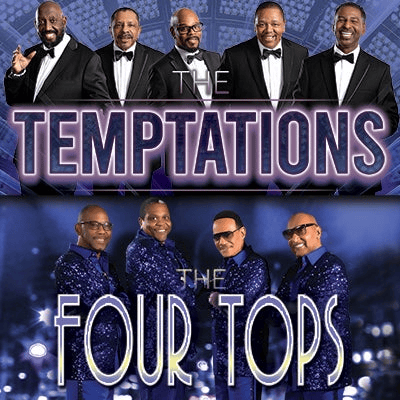
The tale of the tape
The Temptations formed in Detroit in 1960 and became Motown's most successful male group. Their advantage was versatility: five singers who could each lead, spanning David Ruffin's raw, gospel-scarred baritone, Eddie Kendricks' falsetto, Dennis Edwards' power and Melvin Franklin's bass. They could sing a sweet ballad in 1965 and a seven-minute piece of psychedelic social commentary in 1972.
The Four Tops formed in 1953 and are the more remarkable institutional story: the same four men — Levi Stubbs, Abdul "Duke" Fakir, Renaldo "Obie" Benson and Lawrence Payton — sang together for over four decades without a single lineup change until Payton's death in 1997. Their advantage was Levi Stubbs, one of the most desperate, urgent voices in popular music, and a body of work with Holland–Dozier–Holland that is among the finest in the Motown catalogue.
Round by round
The Temptations lead on range. "My Girl" is the most famous record either group made, and Smokey Robinson wrote it around David Ruffin's voice. "Ain't Too Proud To Beg" and "Get Ready" are the up-tempo Motown machine at full power.
Then the Norman Whitfield era changes everything. "Papa Was A Rollin' Stone," "Ball Of Confusion," "Cloud Nine" and "Psychedelic Shack" are psychedelic soul — long, dark, socially engaged, and about as far from "My Girl" as it is possible to travel. "Just My Imagination" and "I Wish It Would Rain" are the ballads that show what was lost when Ruffin and Kendricks left.
The Four Tops answer with Levi Stubbs. "Reach Out I'll Be There" is the greatest record here by a distance — Stubbs sounds genuinely frantic, and Holland–Dozier–Holland built an arrangement that never resolves. "I Can't Help Myself," "Standing In The Shadows Of Love" and "It's The Same Old Song" are the same partnership at full tilt.
"Baby I Need Your Loving" is the first hit and still devastating. "Ain't No Woman" and "Keeper Of The Castle" are the post-Motown Dunhill records, and "Still Water (Love)" is the deep cut.
The verdict, and where to go next
The Temptations win on breadth — no other group made both "My Girl" and "Papa Was A Rollin' Stone." The Four Tops win on any individual record you care to name, because Levi Stubbs was the better singer and the Holland–Dozier–Holland material was the better material. Take the Tops on points; take the Temptations for the catalogue.
Albums: The Temptations' Cloud Nine and All Directions; The Four Tops' Reach Out.
And underneath both: The Funk Brothers, Motown's house band, who played on essentially every record here and were uncredited for decades. The documentary Standing in the Shadows of Motown is essential.
Comments
Post a Comment