
RockerZ Soft Rock VibeZ

Sixty-eight tracks of music that was critically despised for thirty years and is now quietly beloved. Soft rock has had the last laugh.
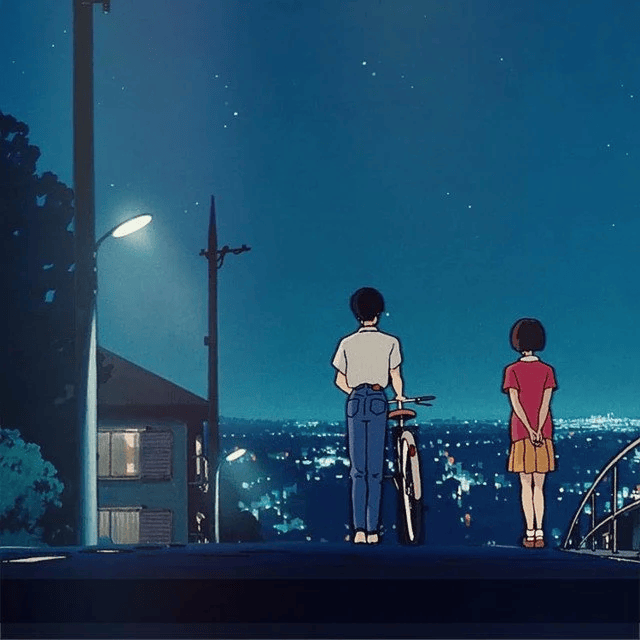

The rehabilitation of the seventies

Soft rock — the melodic, immaculately produced, largely Los Angeles-made pop of roughly 1972 to 1984 — was for a long time the most sneered-at music in the rock canon. It was too clean, too commercial, too obviously the work of session professionals rather than tortured artists.

The reassessment came from two directions. Musicians noticed the harmonic sophistication and the playing; hip-hop and modern-funk producers noticed the immaculate recordings and started sampling them. What was once called adult-oriented rock is now discussed as yacht rock, and the affection is genuine.

Sixty-eight tracks is a proper survey, and it takes in the disco-adjacent, the country-adjacent and the straightforwardly strange.

What to listen for

Boz Scaggs' "JoJo" is the sophisticate's pick. Scaggs' Silk Degrees was recorded with the musicians who went on to form Toto, and it is one of the best-made records of the decade.

Kenny Loggins' "This Is It" was co-written with Michael McDonald and is about Loggins' father facing surgery — considerably heavier than its smoothness suggests.

Christopher Cross appears twice, and "Sailing" is the genre's purest distillation: a song about nothing happening, arranged perfectly.

Frankie Valli & The Four Seasons' "December, 1963" is the biggest record here and one of the most successful singles ever released.

Stephen Bishop's "On And On" and Orleans' "Dance with Me" are the deep cuts collectors love, and Player's "Baby Come Back" is the archetype.

The Bee Gees' "Fanny (Be Tender With My Love)" is the one to play for anyone who only knows the disco era — the Gibb brothers were extraordinary songwriters long before Saturday Night Fever.

Soulive and Dave Matthews' "Joyful Girl" — an Ani DiFranco cover — and Stereophonics' "Maybe Tomorrow" are the modern intrusions, and both fit.

Go deeper

Three albums: Boz Scaggs' Silk Degrees, Steely Dan's Aja, and Toto's Toto IV. Those three explain the entire aesthetic and the musicianship behind it.

For the session players who actually made this music: Jeff Porcaro on drums, David Hungate and Lee Sklar on bass, Larry Carlton and Steve Lukather on guitar. The same names recur across hundreds of records.

And for the afterlife: Japanese city pop — Tatsuro Yamashita, Mariya Takeuchi — is essentially this music made in Tokyo, and it has had its own extraordinary internet revival.

Comments

Popular posts from this blog

Monty Alexander VibeZ

There is a moment on almost every Monty Alexander record where the jazz piano trio stops behaving like a jazz piano trio and starts behaving like a Kingston sound system. That moment is the whole point. Fifty tracks deep, this is the sound of a man who never asked permission to be two things at once. The pianist who brought Kingston to the Carnegie stage Monty Alexander was born in Kingston, Jamaica in 1944, and by his teens he was already gigging around the island — close enough to the birth of ska and rocksteady to have absorbed it in his bones rather than learned it from records. He moved to the United States in 1961, and the origin story that follows is the kind that sounds invented: Frank Sinatra heard him playing in a Miami club, and Jilly Rizzo, Sinatra's friend and club owner, put him behind the piano at Jilly's in New York. From there Alexander fell in with Milt Jackson and Ray Brown, two of the most demanding rhythm partners in the music, and never really ...

GuiltyBeatZ VibeZ

If you have danced to anything out of Accra in the last ten years, you have probably danced to GuiltyBeatz without knowing his name. Forty-seven tracks of a producer's fingerprints — and the fingerprints turn out to be the melody. The Ghanaian producer who made Afrobeats swing Ronald Banful, who records as GuiltyBeatz, is a Ghanaian producer and DJ whose sound sits at the crossroads where Ghanaian highlife, Nigerian Afrobeats, amapiano and UK dance music all meet. He came up producing for Mr Eazi — the Banku Music partnership is where a lot of listeners first heard him — and his breakout as a name in his own right came with "Akwaaba," the 2018 track with Mr Eazi, Patapaa and Pappy Kojo that spawned a dance craze and became one of the defining African club records of its year. His reputation went global when he worked on Beyoncé's The Lion King: The Gift , but the more interesting story is the consistency. A GuiltyBeatz beat is usually ide...

Kashif VibeZ

Kashif is the reason a lot of 1980s R&B sounds the way it does — and the reason you can hear the difference between a synth bassline played by someone who understood bass and one programmed by someone who didn't. This is a producer's playlist, and the producer is everywhere. The architect of the synthesized soul record Kashif was born Michael Jones in Brooklyn in 1956, raised in foster care, and taught himself music young enough that by his teens he was touring with B.T. Express. What he did next reshaped a decade. In the early 1980s, as a producer, arranger and multi-instrumentalist, he was among the first to build R&B records around programmed synthesizers — the Minimoog bass, the Linn drum machine, the Fairlight — without letting them sound cold. That distinction matters. Plenty of producers adopted the new gear; Kashif made it groove . His basslines are played with the phrasing of a funk bassist, full of slides and ghost notes, which is why rec...