
Walter Beasley’s Sax Therapy

Twenty tracks from a saxophonist who has spent forty years teaching at Berklee and making the kind of records the academy tends to sneer at. Both facts are relevant.
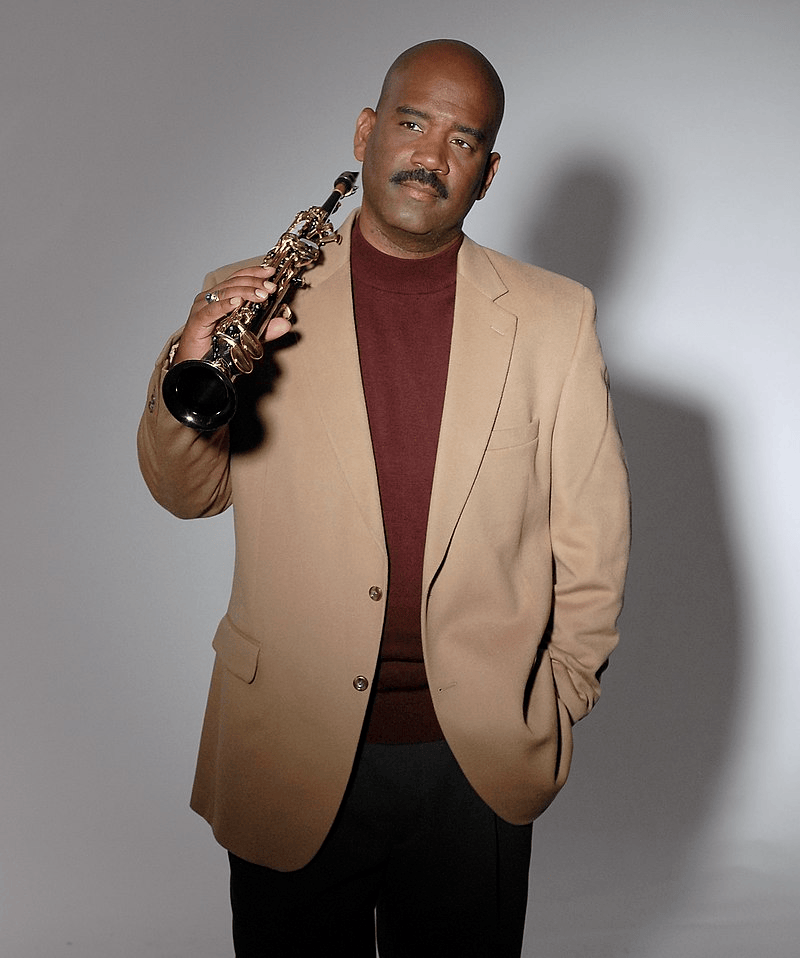

Professor Beasley

Walter Beasley was born in El Centro, California in 1961, graduated from Berklee College of Music in 1984, took a short-term teaching post there a year later, and never left — he is now a full professor. He plays soprano and alto saxophone, sings on his own records, and runs his own label and publishing company.

That combination is worth pausing on. Smooth jazz is routinely dismissed as commercially motivated fluff made by players who could not cut it elsewhere. Beasley is a career academic at one of the most demanding music schools in the world who has chosen this idiom deliberately, and his stated influences — classical training, jazz education, a lifelong love of R&B and funk — describe exactly what the records sound like.

What to listen for

The covers are where his taste shows. "Killing Me Softly" and "It Might Be You" are the obvious ones, but the interesting choices are elsewhere.

"Sideshow" is the Blue Magic song — a Philadelphia soul deep cut that few instrumentalists would think to reach for. "Aubrey" is the Bread song. "Be Thankful" is William DeVaughn's "Be Thankful for What You Got," one of the great 1974 soul records.

"Reasons" takes on Earth, Wind & Fire, which for a saxophonist means taking on Philip Bailey's falsetto with a horn — a real test.

"Strasbourg / St. Denis" is the outlier and the most impressive thing here: it is a Roy Hargrove composition, from the hard-bop trumpeter's Earfood, and playing it signals a jazz allegiance the smooth-jazz label would not predict.

"Intimacy," "Heartfelt" and "Acceptance" are the originals, and "Gail's Groove" is the funkiest thing here.

Go deeper

For Your Pleasure (1998) and Ready for Love (2007) are the albums.

Roy Hargrove is the essential next stop for anyone who liked "Strasbourg / St. Denis" — Earfood and the RH Factor project are two very different sides of one of the great modern trumpeters, who died far too young in 2018.

For the saxophone lineage this music comes from: Grover Washington Jr., Hank Crawford and David "Fathead" Newman — players who made instrumental soul records without anyone calling it a compromise.

A last note on the day job. Teaching at Berklee for four decades while releasing commercial instrumental records is an unusual combination, and it shows in the choices — a Roy Hargrove composition sitting next to a Bread cover is the selection of someone with no anxiety about hierarchy. The genre's reputation for playing safe does not really survive contact with this tracklist.

Comments

Popular posts from this blog

Monty Alexander VibeZ

There is a moment on almost every Monty Alexander record where the jazz piano trio stops behaving like a jazz piano trio and starts behaving like a Kingston sound system. That moment is the whole point. Fifty tracks deep, this is the sound of a man who never asked permission to be two things at once. The pianist who brought Kingston to the Carnegie stage Monty Alexander was born in Kingston, Jamaica in 1944, and by his teens he was already gigging around the island — close enough to the birth of ska and rocksteady to have absorbed it in his bones rather than learned it from records. He moved to the United States in 1961, and the origin story that follows is the kind that sounds invented: Frank Sinatra heard him playing in a Miami club, and Jilly Rizzo, Sinatra's friend and club owner, put him behind the piano at Jilly's in New York. From there Alexander fell in with Milt Jackson and Ray Brown, two of the most demanding rhythm partners in the music, and never really ...

GuiltyBeatZ VibeZ

If you have danced to anything out of Accra in the last ten years, you have probably danced to GuiltyBeatz without knowing his name. Forty-seven tracks of a producer's fingerprints — and the fingerprints turn out to be the melody. The Ghanaian producer who made Afrobeats swing Ronald Banful, who records as GuiltyBeatz, is a Ghanaian producer and DJ whose sound sits at the crossroads where Ghanaian highlife, Nigerian Afrobeats, amapiano and UK dance music all meet. He came up producing for Mr Eazi — the Banku Music partnership is where a lot of listeners first heard him — and his breakout as a name in his own right came with "Akwaaba," the 2018 track with Mr Eazi, Patapaa and Pappy Kojo that spawned a dance craze and became one of the defining African club records of its year. His reputation went global when he worked on Beyoncé's The Lion King: The Gift , but the more interesting story is the consistency. A GuiltyBeatz beat is usually ide...

Kashif VibeZ

Kashif is the reason a lot of 1980s R&B sounds the way it does — and the reason you can hear the difference between a synth bassline played by someone who understood bass and one programmed by someone who didn't. This is a producer's playlist, and the producer is everywhere. The architect of the synthesized soul record Kashif was born Michael Jones in Brooklyn in 1956, raised in foster care, and taught himself music young enough that by his teens he was touring with B.T. Express. What he did next reshaped a decade. In the early 1980s, as a producer, arranger and multi-instrumentalist, he was among the first to build R&B records around programmed synthesizers — the Minimoog bass, the Linn drum machine, the Fairlight — without letting them sound cold. That distinction matters. Plenty of producers adopted the new gear; Kashif made it groove . His basslines are played with the phrasing of a funk bassist, full of slides and ghost notes, which is why rec...