
Instant Vintage: Kendrick Lamar – Mr. Morale & The Big Steppers

Eighteen tracks from an album about therapy, generational trauma and the impossibility of being anybody's saviour. This is not an easy record and it was not meant to be.
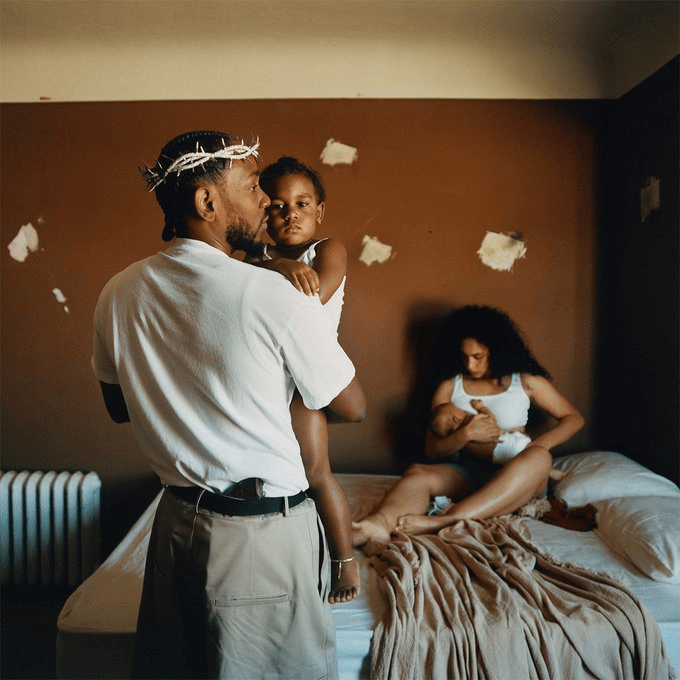

Mr. Morale & The Big Steppers, 2022

Kendrick Lamar had not released an album in five years when this arrived in May 2022, and it is the most difficult thing he has made. Where To Pimp a Butterfly was a public reckoning with race and fame, Mr. Morale turns almost entirely inward: infidelity, therapy, his father, his mother's trauma, his own inherited damage, and an explicit refusal of the role his audience had assigned him.

The framing device is a therapy session, and Whitney Alford — his partner — and the spiritual teacher Eckhart Tolle both appear as voices. It is structured as a double album, and it is genuinely uncomfortable in places, on purpose.

It won the Grammy for Best Rap Album and divided his audience more than anything he has done.

What to listen for

"United In Grief" opens with the line about seeking therapy, and the beat changes four times in five minutes — a statement about instability before a word of argument.

"Father Time" with Sampha is the record's clearest thesis: a song about being raised by a man who could not show weakness, and what that costs. Sampha's hook is one of the most affecting things on the album.

"Mother I Sober" features Beth Gibbons of Portishead and is the hardest track here — six minutes on sexual abuse in his family and its transmission across generations, ending with his partner and children speaking. It is one of the most exposed pieces of writing in mainstream music.

"We Cry Together" with the actor Taylour Paige is a five-minute domestic argument staged in real time. It is almost unlistenable and entirely deliberate.

"Auntie Diaries" addresses two transgender relatives and has been genuinely contested — the intent is plainly supportive, and the language used to get there, including repeated deadnaming and a slur, has been criticised by trans writers as doing harm on the way to its point. Both readings are worth holding.

"Savior" and "Crown" are the refusals; "Mirror" closes with him choosing himself.

Go deeper

good kid, m.A.A.d city and To Pimp a Butterfly are the two that made him, and hearing this after them is the point — the trilogy makes an argument the individual records do not.

Baby Keem's The Melodic Blue is the cousin's album and the closest companion piece.

"The Heart Part 5" and its deepfake video are worth engaging with separately.

Comments

Popular posts from this blog

Monty Alexander VibeZ

There is a moment on almost every Monty Alexander record where the jazz piano trio stops behaving like a jazz piano trio and starts behaving like a Kingston sound system. That moment is the whole point. Fifty tracks deep, this is the sound of a man who never asked permission to be two things at once. The pianist who brought Kingston to the Carnegie stage Monty Alexander was born in Kingston, Jamaica in 1944, and by his teens he was already gigging around the island — close enough to the birth of ska and rocksteady to have absorbed it in his bones rather than learned it from records. He moved to the United States in 1961, and the origin story that follows is the kind that sounds invented: Frank Sinatra heard him playing in a Miami club, and Jilly Rizzo, Sinatra's friend and club owner, put him behind the piano at Jilly's in New York. From there Alexander fell in with Milt Jackson and Ray Brown, two of the most demanding rhythm partners in the music, and never really ...

GuiltyBeatZ VibeZ

If you have danced to anything out of Accra in the last ten years, you have probably danced to GuiltyBeatz without knowing his name. Forty-seven tracks of a producer's fingerprints — and the fingerprints turn out to be the melody. The Ghanaian producer who made Afrobeats swing Ronald Banful, who records as GuiltyBeatz, is a Ghanaian producer and DJ whose sound sits at the crossroads where Ghanaian highlife, Nigerian Afrobeats, amapiano and UK dance music all meet. He came up producing for Mr Eazi — the Banku Music partnership is where a lot of listeners first heard him — and his breakout as a name in his own right came with "Akwaaba," the 2018 track with Mr Eazi, Patapaa and Pappy Kojo that spawned a dance craze and became one of the defining African club records of its year. His reputation went global when he worked on Beyoncé's The Lion King: The Gift , but the more interesting story is the consistency. A GuiltyBeatz beat is usually ide...

Kashif VibeZ

Kashif is the reason a lot of 1980s R&B sounds the way it does — and the reason you can hear the difference between a synth bassline played by someone who understood bass and one programmed by someone who didn't. This is a producer's playlist, and the producer is everywhere. The architect of the synthesized soul record Kashif was born Michael Jones in Brooklyn in 1956, raised in foster care, and taught himself music young enough that by his teens he was touring with B.T. Express. What he did next reshaped a decade. In the early 1980s, as a producer, arranger and multi-instrumentalist, he was among the first to build R&B records around programmed synthesizers — the Minimoog bass, the Linn drum machine, the Fairlight — without letting them sound cold. That distinction matters. Plenty of producers adopted the new gear; Kashif made it groove . His basslines are played with the phrasing of a funk bassist, full of slides and ghost notes, which is why rec...