
James Blake’s Enigmatic VibeZ

Eighteen tracks from a British producer who started in dubstep, became a singer-songwriter, and ended up as the most in-demand collaborator in American rap.
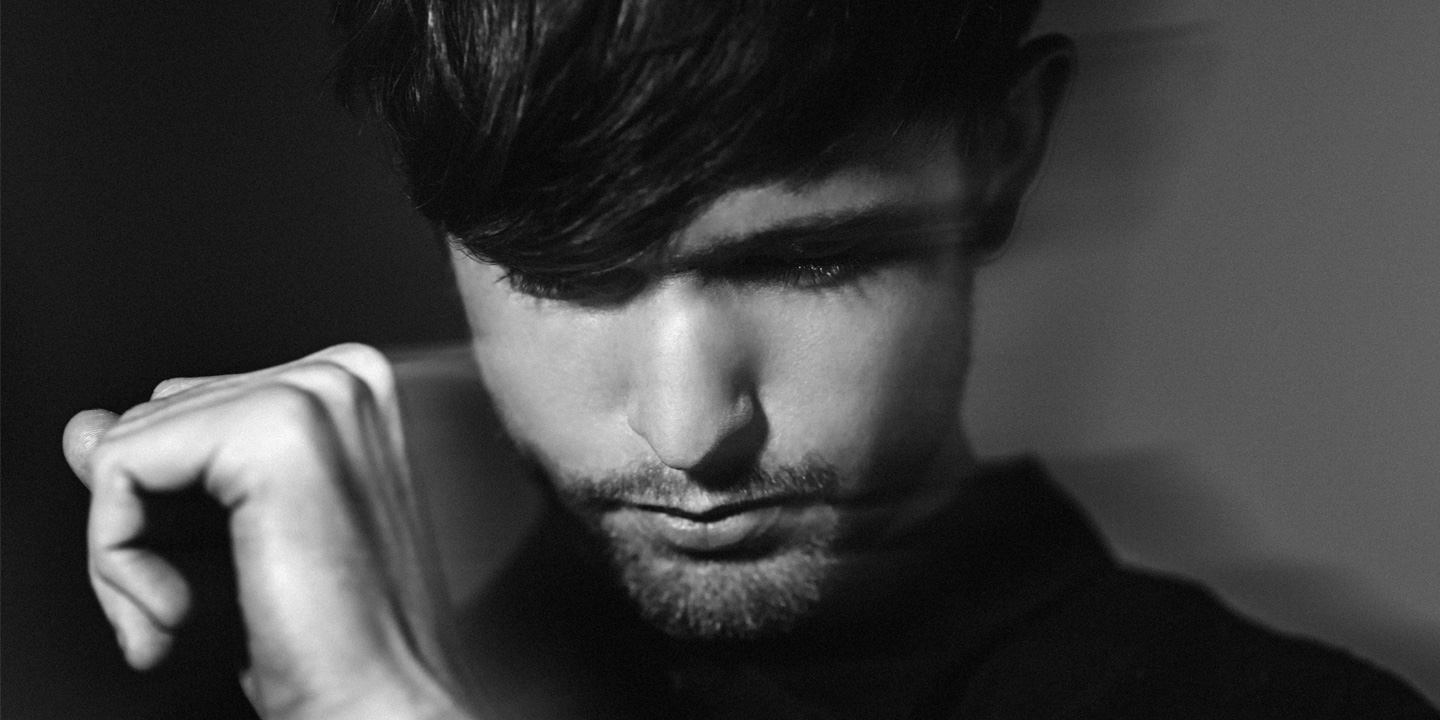

James Blake

James Blake emerged from the London post-dubstep scene around 2009 making instrumental tracks defined by enormous sub-bass and long silences. Then he started singing, and his self-titled 2011 album turned out to be something else entirely: a piano-and-voice record with electronic architecture, and one of the most influential British albums of its decade.

His 2013 album Overgrown won the Mercury Prize. Since then he has become an unlikely fixture in American hip-hop — working with Kendrick Lamar, Beyoncé, Jay-Z, Frank Ocean, Travis Scott and André 3000 — largely because his sense of space is unlike anyone else's.

He has also spoken publicly and usefully about depression and about the "sad boy" framing applied to men who write about emotion.

What to listen for

"Retrograde" is the essential and probably his best song — that hummed opening, the slow build, and a synth entrance at the chorus that genuinely startles the first time.

"Limit To Your Love" is a Feist cover and the record that introduced most listeners to him. The bass drop is the whole argument for his production.

"The First Time Ever I Saw Your Face" takes on Roberta Flack, which is close to reckless, and works by refusing to compete.

"Where's The Catch?" with André 3000 contains one of André's best late verses, and "King's Dead" with Kendrick Lamar, Jay Rock and Future is the biggest record he has touched.

"Coming Back" with SZA and "Nonviolent Communication" with Metro Boomin, A$AP Rocky and 21 Savage show the range of rooms he fits into.

"Say What You Will" is the most emotionally direct thing he has written — a song about making peace with other people's success.

Go deeper

Overgrown (2013) is the album, and The Colour in Anything (2016) is the sprawling one.

His collaborative album with Lil Yachty, Bad Cameo, is the strangest thing in his catalogue and worth hearing.

For the scene he came from: Burial's Untrue is the foundational record of British post-dubstep and one of the most beautiful albums of the century. Mount Kimbie and Actress are the neighbours.

A last note on why rappers keep calling. What Blake offers is not a hook or a texture but silence — his productions leave holes where most producers would put something, and a rapper dropped into that space sounds twice as large. It is a genuinely unusual thing to be able to provide, and it explains a guest list that runs from Kendrick Lamar to André 3000 by way of Beyoncé.

Comments

Popular posts from this blog

Monty Alexander VibeZ

There is a moment on almost every Monty Alexander record where the jazz piano trio stops behaving like a jazz piano trio and starts behaving like a Kingston sound system. That moment is the whole point. Fifty tracks deep, this is the sound of a man who never asked permission to be two things at once. The pianist who brought Kingston to the Carnegie stage Monty Alexander was born in Kingston, Jamaica in 1944, and by his teens he was already gigging around the island — close enough to the birth of ska and rocksteady to have absorbed it in his bones rather than learned it from records. He moved to the United States in 1961, and the origin story that follows is the kind that sounds invented: Frank Sinatra heard him playing in a Miami club, and Jilly Rizzo, Sinatra's friend and club owner, put him behind the piano at Jilly's in New York. From there Alexander fell in with Milt Jackson and Ray Brown, two of the most demanding rhythm partners in the music, and never really ...

GuiltyBeatZ VibeZ

If you have danced to anything out of Accra in the last ten years, you have probably danced to GuiltyBeatz without knowing his name. Forty-seven tracks of a producer's fingerprints — and the fingerprints turn out to be the melody. The Ghanaian producer who made Afrobeats swing Ronald Banful, who records as GuiltyBeatz, is a Ghanaian producer and DJ whose sound sits at the crossroads where Ghanaian highlife, Nigerian Afrobeats, amapiano and UK dance music all meet. He came up producing for Mr Eazi — the Banku Music partnership is where a lot of listeners first heard him — and his breakout as a name in his own right came with "Akwaaba," the 2018 track with Mr Eazi, Patapaa and Pappy Kojo that spawned a dance craze and became one of the defining African club records of its year. His reputation went global when he worked on Beyoncé's The Lion King: The Gift , but the more interesting story is the consistency. A GuiltyBeatz beat is usually ide...

Kashif VibeZ

Kashif is the reason a lot of 1980s R&B sounds the way it does — and the reason you can hear the difference between a synth bassline played by someone who understood bass and one programmed by someone who didn't. This is a producer's playlist, and the producer is everywhere. The architect of the synthesized soul record Kashif was born Michael Jones in Brooklyn in 1956, raised in foster care, and taught himself music young enough that by his teens he was touring with B.T. Express. What he did next reshaped a decade. In the early 1980s, as a producer, arranger and multi-instrumentalist, he was among the first to build R&B records around programmed synthesizers — the Minimoog bass, the Linn drum machine, the Fairlight — without letting them sound cold. That distinction matters. Plenty of producers adopted the new gear; Kashif made it groove . His basslines are played with the phrasing of a funk bassist, full of slides and ghost notes, which is why rec...