Thirteen tracks and roughly twenty-five guests. Black Radio III closes a trilogy that spent a decade arguing jazz and Black popular music were never separate things.
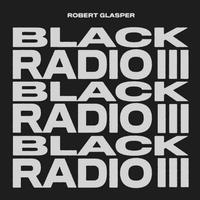
Black Radio III, 2022
Robert Glasper's Black Radio arrived in 2012 and won the Grammy for Best R&B Album — a jazz pianist's record, in an R&B category, which was the entire point. The premise was simple and radical: put a jazz trio behind singers and rappers, treat both traditions as equals, and see what happens.
The third volume, released in 2022, is the most explicitly political of the three. It opens with a spoken-word piece by Amir Sulaiman and returns repeatedly to questions of Black life, faith and survival, without ever becoming a lecture.
It won Best R&B Album at the Grammys, ten years after the first one did.
What to listen for
"Black Superhero" is the statement track — Killer Mike, BJ The Chicago Kid and Big K.R.I.T. on one record, and a genuinely thrilling piece of construction.
"Better Than I Imagined" with H.E.R. and Meshell Ndegeocello won a Grammy and is the most beautiful thing here.
"Why We Speak" features Q-Tip and Esperanza Spalding — and Spalding sings partly in French and Portuguese, which is the kind of choice that makes this series what it is.
"Everybody Wants To Rule The World" with Lalah Hathaway and Common reworks the Tears for Fears song into something considerably darker.
"Over" with Yebba is the vocal showcase, and "It Don't Matter" with Gregory Porter and Ledisi is the straight-soul one.
"Shine" with D Smoke and Tiffany Gouché and "Forever" with PJ Morton and India.Arie round out the guest list, and Jennifer Hudson's appearance on "Out of My Hands" is the biggest voice on the record.
Go deeper
The original Black Radio (2012) is where to start — its version of Nirvana's "Smells Like Teen Spirit" and Erykah Badu's "Afro Blue" are the two tracks that made the case.
Black Radio 2 completes the set.
Glasper's straight-ahead trio records, particularly In My Element, are the proof that he earned the right to do all this.
And Dinner Party — with Terrace Martin, Kamasi Washington and 9th Wonder — is the ongoing extension of the same idea.
One final point about what the trilogy achieved. When the first Black Radio won an R&B Grammy in 2013, the category confusion was the story; by the third, nobody found it strange at all. That normalisation is the actual accomplishment — a decade of insisting that jazz musicians and singers belong in the same room until the question stopped being asked.
Comments
Post a Comment