
Morcheeba VibeZ

Twelve tracks from the Bristol trip-hop band who were always the warmest of the bunch. Morcheeba made unease sound like a Sunday afternoon.
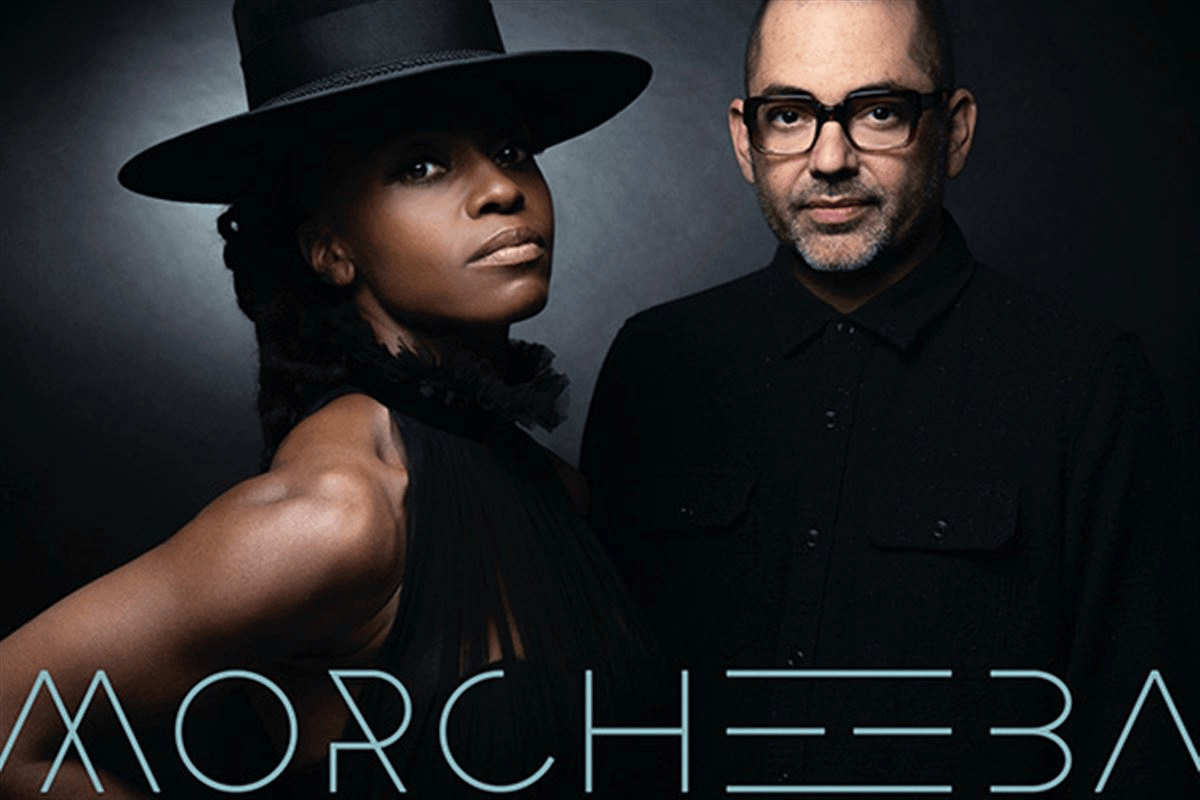

Morcheeba

Morcheeba formed in the mid-1990s around brothers Paul and Ross Godfrey and singer Skye Edwards, and arrived into the middle of the trip-hop wave alongside Portishead, Massive Attack and Tricky.

What distinguished them was temperature. Where Portishead was genuinely bleak and Massive Attack genuinely menacing, Morcheeba brought blues guitar, country-ish slide and a singer with a warm, unhurried voice. The result was more accessible and, for a long time, less critically respected — which now looks like a category error.

Skye left in 2003, released solo work, and rejoined in 2010. The band has continued in various configurations since.

What to listen for

"Over and Over" and "Big Calm" are the essentials from their strongest period — Big Calm (1998) is the album most people name.

"Sweet L.A." and "Fear and Love" show the blues instincts most clearly. Ross Godfrey is a genuinely good slide guitarist, which is not a sentence you expect in a trip-hop context.

"Love Dub" and "Crimson" are the deeper, more atmospheric cuts.

The two Skye solo tracks — "Love Show" and "What's Wrong With Me" — are from her time away from the band and are worth hearing for what her voice does without the Godfreys' production around it.

"Set Your Sails" and "Easier Said Than Done" are from the later reunion records, and "Dead To Me" is the most recent material.

Throughout, listen to how little the drums do. Trip-hop's whole architecture is a slow breakbeat with everything else floating above it, and Morcheeba built that framework more melodically than most.

Go deeper

Big Calm (1998) is the album to hear whole.

For the Bristol scene: Massive Attack's Blue Lines and Mezzanine, Portishead's Dummy, and Tricky's Maxinquaye. Those four albums are the genre, and all of them come from one small English city.

For the American parallel: Zero 7, Thievery Corporation and Air from France worked adjacent territory.

And for what trip-hop was actually built from — slowed-down hip-hop breaks, dub bass, film-score strings — the source material is 1970s soul and Ennio Morricone in roughly equal measure.

A closing note on being the accessible one. Morcheeba were dismissed for years precisely because they were pleasant, and that judgment now looks like a category error — warmth is a deliberate aesthetic choice, not a failure of nerve. Twenty-five years on, the Bristol records that were praised for their bleakness and the ones dismissed for their comfort have all survived, which suggests the original argument was never the important thing.

Comments

Popular posts from this blog

Monty Alexander VibeZ

There is a moment on almost every Monty Alexander record where the jazz piano trio stops behaving like a jazz piano trio and starts behaving like a Kingston sound system. That moment is the whole point. Fifty tracks deep, this is the sound of a man who never asked permission to be two things at once. The pianist who brought Kingston to the Carnegie stage Monty Alexander was born in Kingston, Jamaica in 1944, and by his teens he was already gigging around the island — close enough to the birth of ska and rocksteady to have absorbed it in his bones rather than learned it from records. He moved to the United States in 1961, and the origin story that follows is the kind that sounds invented: Frank Sinatra heard him playing in a Miami club, and Jilly Rizzo, Sinatra's friend and club owner, put him behind the piano at Jilly's in New York. From there Alexander fell in with Milt Jackson and Ray Brown, two of the most demanding rhythm partners in the music, and never really ...

GuiltyBeatZ VibeZ

If you have danced to anything out of Accra in the last ten years, you have probably danced to GuiltyBeatz without knowing his name. Forty-seven tracks of a producer's fingerprints — and the fingerprints turn out to be the melody. The Ghanaian producer who made Afrobeats swing Ronald Banful, who records as GuiltyBeatz, is a Ghanaian producer and DJ whose sound sits at the crossroads where Ghanaian highlife, Nigerian Afrobeats, amapiano and UK dance music all meet. He came up producing for Mr Eazi — the Banku Music partnership is where a lot of listeners first heard him — and his breakout as a name in his own right came with "Akwaaba," the 2018 track with Mr Eazi, Patapaa and Pappy Kojo that spawned a dance craze and became one of the defining African club records of its year. His reputation went global when he worked on Beyoncé's The Lion King: The Gift , but the more interesting story is the consistency. A GuiltyBeatz beat is usually ide...

Kashif VibeZ

Kashif is the reason a lot of 1980s R&B sounds the way it does — and the reason you can hear the difference between a synth bassline played by someone who understood bass and one programmed by someone who didn't. This is a producer's playlist, and the producer is everywhere. The architect of the synthesized soul record Kashif was born Michael Jones in Brooklyn in 1956, raised in foster care, and taught himself music young enough that by his teens he was touring with B.T. Express. What he did next reshaped a decade. In the early 1980s, as a producer, arranger and multi-instrumentalist, he was among the first to build R&B records around programmed synthesizers — the Minimoog bass, the Linn drum machine, the Fairlight — without letting them sound cold. That distinction matters. Plenty of producers adopted the new gear; Kashif made it groove . His basslines are played with the phrasing of a funk bassist, full of slides and ghost notes, which is why rec...