
MIchael Hoppe’s Poetic Vibes

Twenty-two tracks of Carl Sandburg's love poetry read aloud over original music. This is a spoken-word record, and it asks you to actually listen.

The Lover: The Love Poetry of Carl Sandburg

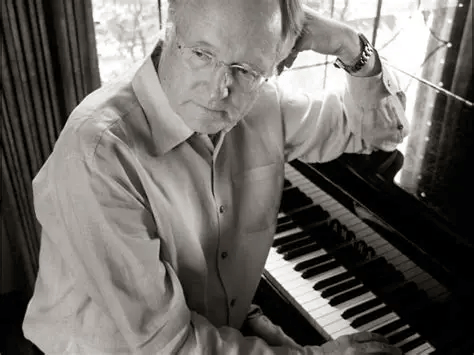
This is Michael Hoppé and Tim Wheater's 2001 album, and its origin is unusually charming. Hoppé is a composer; his grandfather was E.O. Hoppé, one of the major photographic portraitists of the early twentieth century, who photographed poets including Sandburg. An earlier Hoppé album drew on those portraits; Sandburg's granddaughter heard it, a connection was made through Sandburg's biographer, and this record followed.

Hoppé composed the music. Tim Wheater — better known as a flautist — narrates, and his speaking voice turns out to be a rich, unhurried baritone entirely suited to the job. Six instrumental interludes break up the readings.

Who Carl Sandburg was

Carl Sandburg (1878–1967) was the son of Swedish immigrants, born in Galesburg, Illinois. He won three Pulitzer Prizes — two for poetry, one for his biography of Abraham Lincoln — and was the defining poet of industrial America. Chicago Poems gave the city its lasting epithet as the city of big shoulders.

He was also a working-class radical, a journalist, and a collector of American folk song; The American Songbag is a significant document in the folk revival's prehistory. That he also wrote tender, plain-spoken love poetry is less well known, and it is what this record is built on.

What to listen for

"Explanation Of Love" and "The First Kiss Came With Flame" are the most direct. "Monotone" is one of Sandburg's most anthologised short poems and is remarkable in how little it uses.

"Dreams In The Dusk," "Under The Harvest Moon" and "The Wind Sings Welcome In Early Spring" show the imagist influence — Sandburg was working in the same moment as Pound and Amy Lowell.

"An Old Woman" and "Offering And Rebuff" are the sadder ones, and "Joy" the most unguarded.

The interludes — "Grace," "Lover's Lament," "The Unforgetting Heart," "Beloved," "Lachrymosa" — give you room between poems, which is the correct structural instinct.

Go deeper

Read Sandburg. Chicago Poems (1916) is the essential collection, and the Selected Poems covers the range.

For poetry set to music, the tradition is deep: Langston Hughes reading with Charles Mingus on Weary Blues, Gil Scott-Heron, The Last Poets, and Dylan Thomas's recordings of his own work.

Michael Hoppé's other albums, particularly The Poet: Romances for Cello with Martin Tillman, work the same quiet territory.

Comments

Popular posts from this blog

Monty Alexander VibeZ

There is a moment on almost every Monty Alexander record where the jazz piano trio stops behaving like a jazz piano trio and starts behaving like a Kingston sound system. That moment is the whole point. Fifty tracks deep, this is the sound of a man who never asked permission to be two things at once. The pianist who brought Kingston to the Carnegie stage Monty Alexander was born in Kingston, Jamaica in 1944, and by his teens he was already gigging around the island — close enough to the birth of ska and rocksteady to have absorbed it in his bones rather than learned it from records. He moved to the United States in 1961, and the origin story that follows is the kind that sounds invented: Frank Sinatra heard him playing in a Miami club, and Jilly Rizzo, Sinatra's friend and club owner, put him behind the piano at Jilly's in New York. From there Alexander fell in with Milt Jackson and Ray Brown, two of the most demanding rhythm partners in the music, and never really ...

GuiltyBeatZ VibeZ

If you have danced to anything out of Accra in the last ten years, you have probably danced to GuiltyBeatz without knowing his name. Forty-seven tracks of a producer's fingerprints — and the fingerprints turn out to be the melody. The Ghanaian producer who made Afrobeats swing Ronald Banful, who records as GuiltyBeatz, is a Ghanaian producer and DJ whose sound sits at the crossroads where Ghanaian highlife, Nigerian Afrobeats, amapiano and UK dance music all meet. He came up producing for Mr Eazi — the Banku Music partnership is where a lot of listeners first heard him — and his breakout as a name in his own right came with "Akwaaba," the 2018 track with Mr Eazi, Patapaa and Pappy Kojo that spawned a dance craze and became one of the defining African club records of its year. His reputation went global when he worked on Beyoncé's The Lion King: The Gift , but the more interesting story is the consistency. A GuiltyBeatz beat is usually ide...

Kashif VibeZ

Kashif is the reason a lot of 1980s R&B sounds the way it does — and the reason you can hear the difference between a synth bassline played by someone who understood bass and one programmed by someone who didn't. This is a producer's playlist, and the producer is everywhere. The architect of the synthesized soul record Kashif was born Michael Jones in Brooklyn in 1956, raised in foster care, and taught himself music young enough that by his teens he was touring with B.T. Express. What he did next reshaped a decade. In the early 1980s, as a producer, arranger and multi-instrumentalist, he was among the first to build R&B records around programmed synthesizers — the Minimoog bass, the Linn drum machine, the Fairlight — without letting them sound cold. That distinction matters. Plenty of producers adopted the new gear; Kashif made it groove . His basslines are played with the phrasing of a funk bassist, full of slides and ghost notes, which is why rec...