Thirty tracks built around a voice most people have heard hundreds of times without knowing whose it is. Big Rube is the sound of the Dungeon Family thinking out loud.
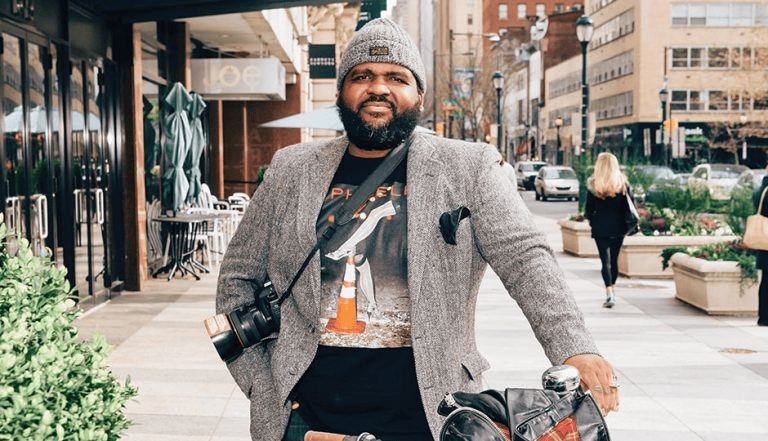
Big Rube
Ruben Bailey is a founding member of Atlanta's Dungeon Family — the collective around Organized Noize that produced OutKast, Goodie Mob, Society of Soul and, through them, an enormous share of what Southern hip-hop became.
His role is unusual and essential: he is the collective's poet. Across three decades, Big Rube has opened, closed and punctuated other people's albums with spoken-word pieces delivered in an enormous, deliberate bass voice — dense, allusive, frequently apocalyptic. If you have heard an OutKast or Goodie Mob album, you have heard him, whether or not you noticed.
He is also a member of Society of Soul, the Dungeon Family's own group, whose Brainchild is a genuinely strange and excellent record.
What to listen for
OutKast's "SpottieOttieDopaliscious" is the essential and one of the greatest records the genre has produced — seven minutes, a horn line, André and Big Boi talking rather than rapping, and a mood nothing else has matched. Big Rube appears on the album it comes from.
"13th Floor/Growing Old" is the clearest showcase of what he does — his verse opens the track and sets the whole tone of ATLiens.
"Liberation" with CeeLo Green is the other monument: nearly nine minutes from Aquemini, closer to a church service than a rap song.
"Rollin'" credits the Dungeon Family collectively with André 3000, CeeLo and Society of Soul, and is the family portrait.
Rapsody's "Motivation" shows him still being called on by the best writers in the current generation.
"Infinite Power" and "Alpha Omega" are his own pieces, and Society of Soul's "Migratenation" and "Brainchild" are the group work.
Go deeper
OutKast's Aquemini (1998) is the album, and Goodie Mob's Soul Food (1995) is the other essential Dungeon Family document.
Society of Soul's Brainchild (1995) is the lost one and is well worth finding.
The documentary The Art of Organized Noize tells the production side of the story and is genuinely good.
For the spoken-word tradition he works in: The Last Poets, Gil Scott-Heron, Amiri Baraka and Sonia Sanchez. Big Rube belongs in that lineage and is rarely placed there.
A final note on why the poet matters to a rap collective. Most crews have a hype man; the Dungeon Family had a philosopher, and building that role into the architecture of their albums is part of why their records feel like documents rather than collections. Big Rube's verses are where the group states what it believes, and thirty years on they are still the passages people quote back.
Comments
Post a Comment