Fifteen tracks from an artist who spent a decade being underestimated and then made the best mainstream pop album of its year.
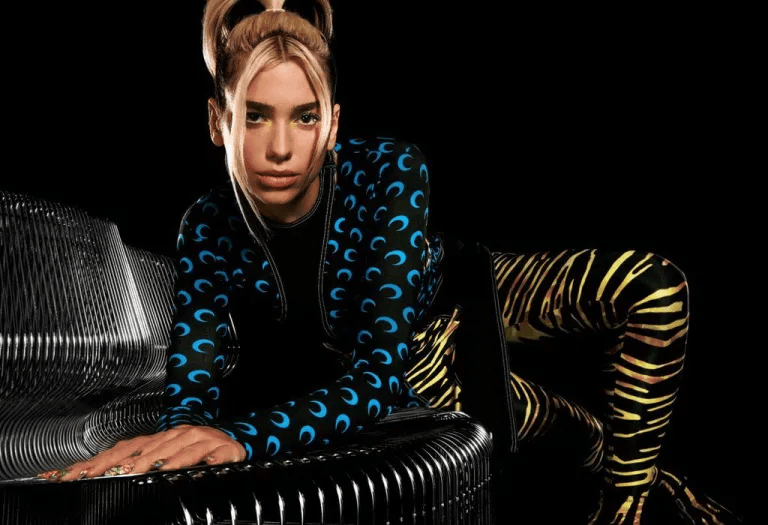
Dua Lipa
Dua Lipa was born in London to Kosovar Albanian parents, moved to Pristina as a teenager, and returned to London alone at fifteen to pursue music. That detail is worth knowing — the self-possession in her public presentation is not manufactured.
Her early career drew a persistent and slightly unfair criticism about live performance and stage presence, which she addressed by getting considerably better at both. Future Nostalgia (2020) then changed the conversation entirely: a disco and nu-disco record released in the first weeks of the pandemic, meticulously constructed, and genuinely fun in a year with very little of it.
She has since become one of the few current pop stars with an identifiable aesthetic rather than a rotating one.
What to listen for
"New Rules" is the record that made her, and it is a smarter song than its reputation — a set of instructions for leaving someone, addressed to yourself.
"IDGAF" appears twice, and the Hazers Remix is worth the comparison.
"One Kiss" with Calvin Harris is the biggest — a piano-house record that was the UK's best-selling single of its year, and the point at which her voice became the most useful instrument in British dance music.
"Electricity" with Silk City — Mark Ronson and Diplo — won a Grammy, and "UN DIA" with J Balvin, Bad Bunny and Tainy is the reggaetón crossing.
"No Lie" with Sean Paul is the earliest of these and shows how quickly she was being sought out.
The Future Nostalgia material — "Pretty Please," "Cool," "Boys Will Be Boys" — is where the songwriting is strongest. "Boys Will Be Boys" in particular is a genuinely angry closing track that most pop albums would not attempt.
"Love Is Religion" in The Blessed Madonna's remix comes from Club Future Nostalgia, the full remix album, which is unusually good.
Go deeper
Future Nostalgia (2020) is the album, and Club Future Nostalgia — mixed by The Blessed Madonna with guests including Missy Elliott and Gwen Stefani — is the companion piece that deserves more attention.
For the disco revival she is part of: Jessie Ware's What's Your Pleasure? came out the same year and is arguably the better record.
And the source material is worth the trip — Chic, Olivia Newton-John's Physical, and INXS, whose "Need You Tonight" is interpolated on the album's title track.
Comments
Post a Comment