Twenty-nine tracks from a west London songwriter who was twenty when her debut won the Mercury Prize. Arlo Parks writes like a novelist.
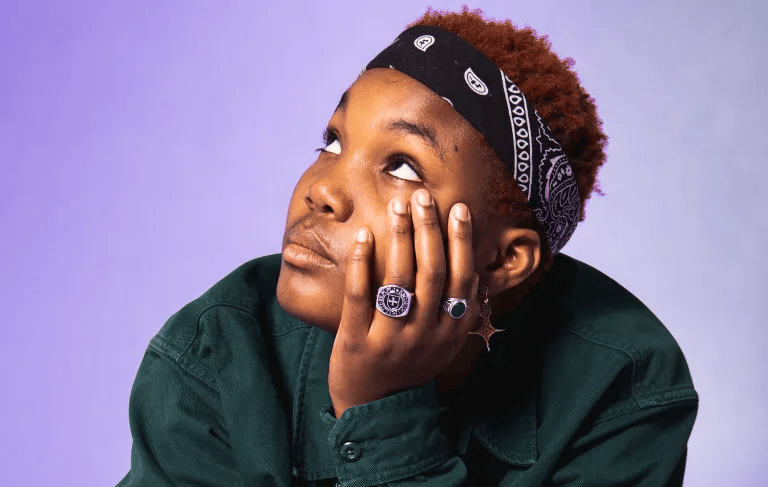
Arlo Parks
Anais Oluwatoyin Estelle Marinho is from Hammersmith, west London, of Nigerian, Chadian and French heritage. She began publishing poetry before she released music, and that is the key to everything — her songs are built around observed detail rather than sentiment, with named characters and specific scenes.
Collapsed in Sunbeams (2021) won the Mercury Prize and the BRIT for Breakthrough Artist. She was twenty, and the album deals directly with depression, queerness, and watching friends struggle — without ever tipping into either despair or self-help.
Her delivery is almost conversational, half-sung, and deliberately understated. It is the opposite of a big vocal performance and considerably harder to sustain.
What to listen for
"Black Dog" is the essential track and one of the most honest songs anyone has written about loving someone through depression. The title is the old euphemism; the lyric refuses euphemism entirely.
"Eugene" is the other pillar — a song about being in love with a friend who is in love with someone else, told with the specificity of a short story.
"Caroline" is the novelist's trick: an argument observed from across the street, rendered entirely in detail with no commentary.
"Hope" is the closest she comes to a straightforward message, and it earns it.
"Collapsed In Sunbeams" is the spoken-word opening and establishes the whole register.
"Softly," "Weightless" and "Blue"-era material come from My Soft Machine, the second album, which is more produced and more interior.
"Portra 400" is named for the Kodak film stock, which tells you how she thinks about images.
Go deeper
Collapsed in Sunbeams (2021) is the album, and it should be heard whole — the sequencing matters.
Her poetry is worth seeking out; she has published and performed it, and it clarifies what the songs are doing.
For artists working the same observational register: Joy Crookes, Celeste and Nilüfer Yanya are the London contemporaries, and Frank Ocean and Sufjan Stevens the acknowledged influences.
Listening note: Parks writes like a diarist and sings like someone reading the diary aloud to one friend, which is why her records feel bigger in a quiet room than on a big system. Give her the volume low and the attention high — the detail is in the asides.
Start with the quieter tracks rather than the singles; her writing makes more sense once you have heard her think aloud.
Comments
Post a Comment