
The Feminine Voice As An Energy Which is Soft, Yielding, Nurturing & Nourishing: A Playlist Dedication

Fifty-five tracks assembled around a quality rather than a genre. The title is a thesis, and the music mostly supports it.
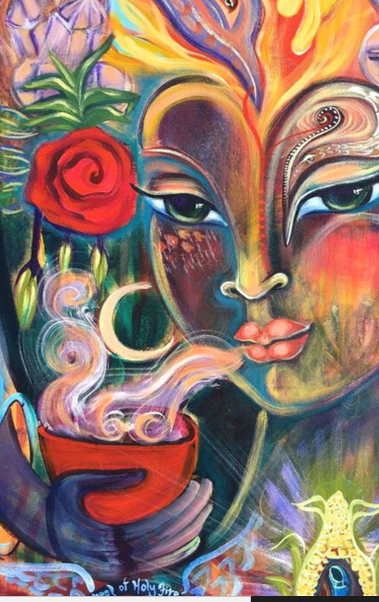

A dedication, and a premise worth examining

The framing here — the feminine voice as an energy that is soft, yielding, nurturing and nourishing — comes out of a familiar way of thinking about gender as complementary energies, with roots in Taoist yin and yang and in various strands of contemporary spiritual practice.

It is worth saying plainly that this is a contested framework. Associating softness and nurture specifically with femininity has a long history of being used to narrow what women are permitted to be, and a number of the artists on this playlist have spent their careers refusing exactly that association. Solange, H.E.R. and Amber Mark are not soft or yielding in any useful sense; they are precise, controlled and frequently furious.

What the selection actually demonstrates is something more interesting than its title: that restraint is a technique rather than a temperament, and that the singers here choose it deliberately.

What to listen for

Sade's "Clean Heart" is the model everything else orbits — a voice used at half its available power, and considerably more forceful for it.

Lianne La Havas's "Good Goodbye" is the best vocal here. She is a superb guitarist as well as a singer, and the harmonic choices are hers.

Solange's "Stay Flo" is the one that most argues with the premise — it is rhythmically assertive and structurally strange, and it belongs on any list about vocal control.

Sona Jobarteh's "Reflections" brings the kora in, and she broke a seven-hundred-year male inheritance to play it.

Sevana's "Carry You" is the Jamaican entry, Mpho Sebina's "No Evil" the Botswanan one, and Yuna's "Lullabies" brings Malaysia in.

Amber Mark's "Heart-Shaped Box" is the Nirvana cover and the single least yielding thing on the playlist.

Duffy's "Stepping Stone" and Maysa's "Love Is A Battlefield" are the deep cuts.

Go deeper

Lianne La Havas's self-titled 2020 album is the one to hear whole — including a Radiohead cover that is better than the original.

Solange's A Seat at the Table and When I Get Home are two of the most formally ambitious albums of the last decade.

And for the framework itself, if it interests you: the Taoist sources are considerably subtler than the popular version, and worth reading directly rather than through the wellness literature.

Comments

Popular posts from this blog

Monty Alexander VibeZ

There is a moment on almost every Monty Alexander record where the jazz piano trio stops behaving like a jazz piano trio and starts behaving like a Kingston sound system. That moment is the whole point. Fifty tracks deep, this is the sound of a man who never asked permission to be two things at once. The pianist who brought Kingston to the Carnegie stage Monty Alexander was born in Kingston, Jamaica in 1944, and by his teens he was already gigging around the island — close enough to the birth of ska and rocksteady to have absorbed it in his bones rather than learned it from records. He moved to the United States in 1961, and the origin story that follows is the kind that sounds invented: Frank Sinatra heard him playing in a Miami club, and Jilly Rizzo, Sinatra's friend and club owner, put him behind the piano at Jilly's in New York. From there Alexander fell in with Milt Jackson and Ray Brown, two of the most demanding rhythm partners in the music, and never really ...

GuiltyBeatZ VibeZ

If you have danced to anything out of Accra in the last ten years, you have probably danced to GuiltyBeatz without knowing his name. Forty-seven tracks of a producer's fingerprints — and the fingerprints turn out to be the melody. The Ghanaian producer who made Afrobeats swing Ronald Banful, who records as GuiltyBeatz, is a Ghanaian producer and DJ whose sound sits at the crossroads where Ghanaian highlife, Nigerian Afrobeats, amapiano and UK dance music all meet. He came up producing for Mr Eazi — the Banku Music partnership is where a lot of listeners first heard him — and his breakout as a name in his own right came with "Akwaaba," the 2018 track with Mr Eazi, Patapaa and Pappy Kojo that spawned a dance craze and became one of the defining African club records of its year. His reputation went global when he worked on Beyoncé's The Lion King: The Gift , but the more interesting story is the consistency. A GuiltyBeatz beat is usually ide...

Kashif VibeZ

Kashif is the reason a lot of 1980s R&B sounds the way it does — and the reason you can hear the difference between a synth bassline played by someone who understood bass and one programmed by someone who didn't. This is a producer's playlist, and the producer is everywhere. The architect of the synthesized soul record Kashif was born Michael Jones in Brooklyn in 1956, raised in foster care, and taught himself music young enough that by his teens he was touring with B.T. Express. What he did next reshaped a decade. In the early 1980s, as a producer, arranger and multi-instrumentalist, he was among the first to build R&B records around programmed synthesizers — the Minimoog bass, the Linn drum machine, the Fairlight — without letting them sound cold. That distinction matters. Plenty of producers adopted the new gear; Kashif made it groove . His basslines are played with the phrasing of a funk bassist, full of slides and ghost notes, which is why rec...