
The Skip Scarborough Songbook

Thirteen songs by one writer. If you know soul music at all, you know at least eight of them — and you probably have never said his name aloud.
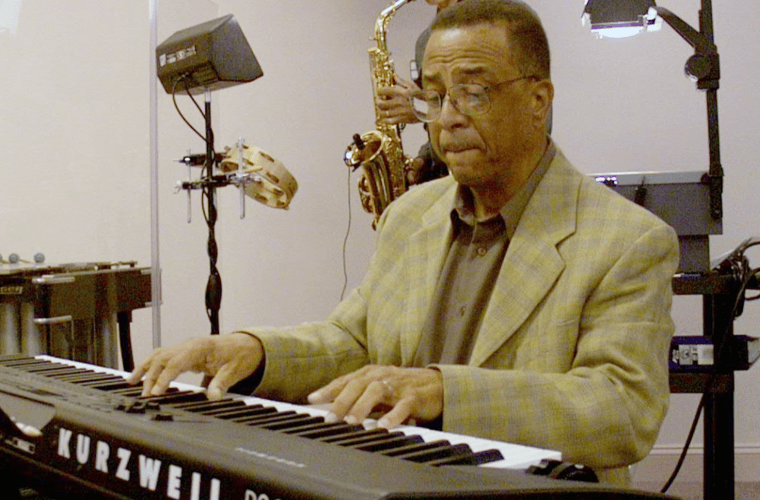
One of the finest R&B songwriters who will always be remembered through his timeless hits.


Skip Scarborough (1944–2003)

Clarence "Skip" Scarborough wrote or co-wrote a startling number of the ballads that define seventies and eighties soul, and he did it as a working songwriter rather than a star. He died in 2003, and his name still means almost nothing to general listeners while the songs remain in constant rotation.

What is most striking about his catalogue is its consistency of temperature. Scarborough wrote warm songs — not sentimental, not showy, but generous. The melodies sit comfortably in the middle of a singer's range, the chord movements are richer than they first appear, and there is almost always a turn in the bridge that lifts the whole thing.

What to listen for

Bill Withers' "Lovely Day" is the one everyone knows, and the co-write with Withers produced that extraordinary sustained note at the end — a piece of singing so famous that people forget somebody had to write the song underneath it.

L.T.D.'s "Love Ballad" is arguably his finest, and it comes twice in the culture: once with Jeffrey Osborne's original lead, and again when George Benson took it back into the charts.

"You Can't Hide Love", here as Earth, Wind & Fire's version, was first cut by Creative Source; EW&F made it permanent.

The Emotions' "Don't Ask My Neighbors" is the connoisseur's pick — a lyric about keeping a private grief private, set to one of the prettiest melodies of the decade.

Anita Baker's "Giving You the Best That I Got" is the late peak, and it won its Grammys for good reason.

Earth, Wind & Fire's "Love's Holiday", Phyllis Hyman's "The Answer Is You" and Patti LaBelle's "Come What May" fill out the picture, and Donald Byrd's "Places And Spaces" is the instrumental left turn.

Go deeper

Play "Love Ballad" and "Giving You the Best That I Got" back to back — eleven years apart, and unmistakably the same writer's hand.

For the songwriter's-catalogue approach generally, the same exercise works beautifully with Linda Creed, Thom Bell, Nickolas Ashford and Valerie Simpson and Leon Ware. Following a writer rather than a performer rearranges how the whole era sounds.

Comments

Popular posts from this blog

Monty Alexander VibeZ

There is a moment on almost every Monty Alexander record where the jazz piano trio stops behaving like a jazz piano trio and starts behaving like a Kingston sound system. That moment is the whole point. Fifty tracks deep, this is the sound of a man who never asked permission to be two things at once. The pianist who brought Kingston to the Carnegie stage Monty Alexander was born in Kingston, Jamaica in 1944, and by his teens he was already gigging around the island — close enough to the birth of ska and rocksteady to have absorbed it in his bones rather than learned it from records. He moved to the United States in 1961, and the origin story that follows is the kind that sounds invented: Frank Sinatra heard him playing in a Miami club, and Jilly Rizzo, Sinatra's friend and club owner, put him behind the piano at Jilly's in New York. From there Alexander fell in with Milt Jackson and Ray Brown, two of the most demanding rhythm partners in the music, and never really ...

GuiltyBeatZ VibeZ

If you have danced to anything out of Accra in the last ten years, you have probably danced to GuiltyBeatz without knowing his name. Forty-seven tracks of a producer's fingerprints — and the fingerprints turn out to be the melody. The Ghanaian producer who made Afrobeats swing Ronald Banful, who records as GuiltyBeatz, is a Ghanaian producer and DJ whose sound sits at the crossroads where Ghanaian highlife, Nigerian Afrobeats, amapiano and UK dance music all meet. He came up producing for Mr Eazi — the Banku Music partnership is where a lot of listeners first heard him — and his breakout as a name in his own right came with "Akwaaba," the 2018 track with Mr Eazi, Patapaa and Pappy Kojo that spawned a dance craze and became one of the defining African club records of its year. His reputation went global when he worked on Beyoncé's The Lion King: The Gift , but the more interesting story is the consistency. A GuiltyBeatz beat is usually ide...

Kashif VibeZ

Kashif is the reason a lot of 1980s R&B sounds the way it does — and the reason you can hear the difference between a synth bassline played by someone who understood bass and one programmed by someone who didn't. This is a producer's playlist, and the producer is everywhere. The architect of the synthesized soul record Kashif was born Michael Jones in Brooklyn in 1956, raised in foster care, and taught himself music young enough that by his teens he was touring with B.T. Express. What he did next reshaped a decade. In the early 1980s, as a producer, arranger and multi-instrumentalist, he was among the first to build R&B records around programmed synthesizers — the Minimoog bass, the Linn drum machine, the Fairlight — without letting them sound cold. That distinction matters. Plenty of producers adopted the new gear; Kashif made it groove . His basslines are played with the phrasing of a funk bassist, full of slides and ghost notes, which is why rec...