Twenty-eight tracks connected by one man's pen. If a soul record from the last forty years has strings that make you sit up, Clare Fischer probably wrote them.
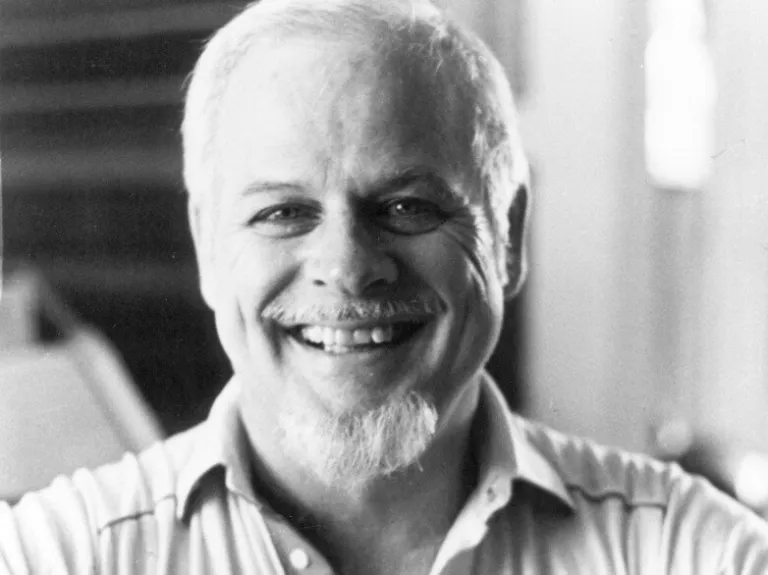
Clare Fischer
Clare Fischer (1928–2012) is one of the most consequential musicians almost nobody outside the profession can name. He was a serious jazz pianist and composer — his tunes "Morning" and "Pensativa" became standards, and he was a pioneer of Latin jazz and bossa nova in America.
Herbie Hancock has said flatly: "I wouldn't be me without Clare Fischer." That is not a small statement.
From the 1970s he became the most sought-after orchestral arranger in popular music. His longest and most productive relationship was with Prince, from 1984 onward — and by most accounts the two men never worked in the same room. Prince would send tapes; Fischer would return arrangements. The distance seems to have suited both.
He received thirteen Grammy nominations and won three, including posthumously.
What to listen for
The Prince tracks are the heart of it. "Venus De Milo," "Slow Love," "Damn U," the horn version of "The Ballad Of Dorothy Parker" and "Segue - One" all carry Fischer arrangements, and once you know what to listen for, the voicings are unmistakable — dense, chromatic, and never resolving where you expect.
The Jacksons' "Bless His Soul" and "Push Me Away" are from Destiny and show the same hand a decade earlier.
DeBarge's "Time Will Reveal" and A Taste Of Honey's "Sukiyaki" are the ones most people know without knowing.
D'Angelo's "Really Love" is the late one — that orchestral introduction on Black Messiah is a Fischer arrangement, recorded shortly before his death, and it opens one of the most anticipated albums of the century.
Tony! Toni! Toné!'s "Anniversary," Brian McKnight's "One Last Cry" and Toni Braxton's "Always" round out the R&B side.
"Harlem Blues" from Mo' Better Blues connects him to the Branford Marsalis and Terence Blanchard world.
Go deeper
2+2 (1981) won a Grammy and is his own album to hear — a vocal and instrumental project of real ambition.
Cal Tjader's recordings of Fischer compositions are the Latin jazz entry point.
And the general lesson: the arranger is the most invisible figure in popular music and frequently the one who decides whether a record moves you.
Listening note: pay attention to the middle of the arrangements rather than the top. Fischer's signature lives in the inner voices — the second and third parts nobody hums — where a chord you thought you recognised quietly turns into something stranger and sadder.
Comments
Post a Comment