Twenty-seven tracks from a songwriter who had one of the biggest debut albums in history and then spent thirty years refusing to repeat it.
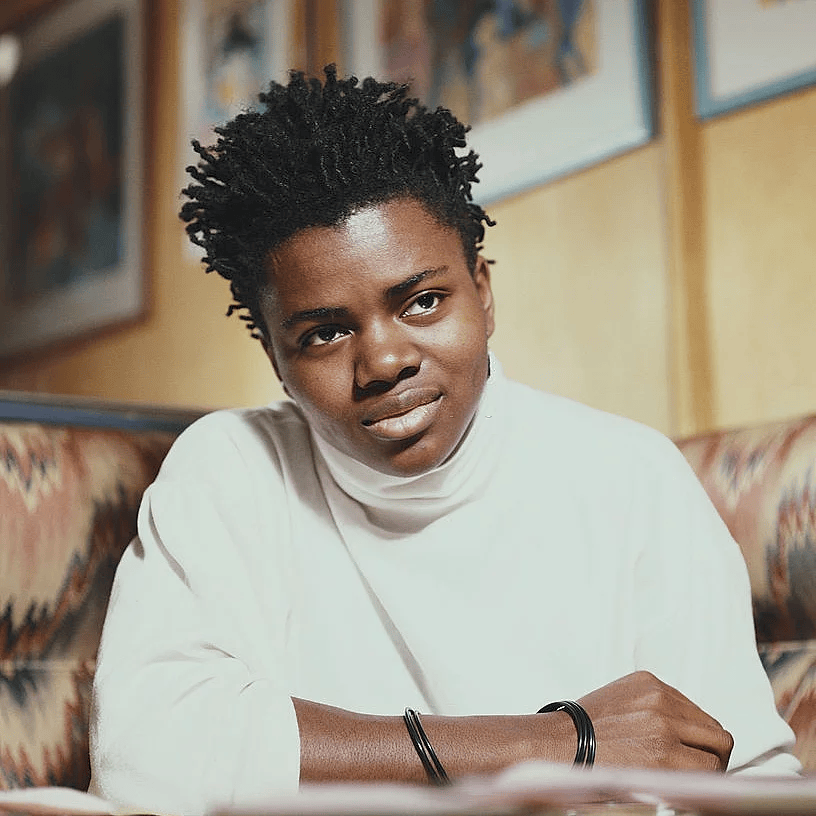
Tracy Chapman
Tracy Chapman grew up in Cleveland, Ohio, raised by a single mother, and studied anthropology and African studies at Tufts. Her self-titled 1988 debut was released into a pop landscape dominated by synthesisers and sold twenty million copies on the strength of a woman, a guitar and a set of songs about poverty, domestic violence and political change.
The record won three Grammys, and its success owed something to an accident: when Stevie Wonder's equipment failed at the Nelson Mandela 70th Birthday Tribute concert at Wembley, Chapman was sent back out to fill the gap, alone, in front of a global television audience of several hundred million. Sales went vertical within days.
She has released sparingly, given almost no interviews, guarded her privacy absolutely, and declined to perform live for long stretches. In 2024 she appeared at the Grammys to perform "Fast Car" with Luke Combs, whose country cover had introduced it to another generation.
What to listen for
"Fast Car" is one of the great American songs. It is about escape that does not quite work — the verses advance, the chorus keeps returning to the same image, and the structure is the meaning.
"Behind the Wall" is the one to sit with. It is sung entirely a cappella, describes domestic violence and police inaction, and lasts under two minutes. Nothing else on a multi-platinum album has ever sounded like it.
"Talkin' Bout a Revolution" and "Across the Lines" are the political ones, and "Mountains O' Things" is the sharpest piece of writing — a fantasy of wealth that curdles as it goes.
"Crossroads" and "All That You Have Is Your Soul" come from the second album, made under enormous pressure and considerably angrier.
"Give Me One Reason"-era material and "The Love That You Had" show the blues side.
"The Rape of the World" opens this selection, which is a bold choice — an eco-political song from New Beginning, and among her most direct.
Go deeper
Tracy Chapman (1988) should be heard whole; it is thirty-six minutes and there is nothing wasted.
New Beginning (1995) contains "Give Me One Reason" and is the other essential.
For the lineage: Odetta, Nina Simone and Richie Havens before; Joy Oladokun, Brittany Howard and Allison Russell after.
Comments
Post a Comment