Eddie Rockerz VibeZ - curated playlists, mixes and music commentary

Dig the crates

Every playlist on the blog, sorted by where it takes you.

Browse all 600+ VibeZ

DJ Mixes & Series

The house sets, the Producer Series and the running volumes.

Show all 16Show fewer

Black Lives Matter: A Reggae Tribute

Forty-one records assembled in the summer of 2020, arguing that reggae had been making this case for fifty years before the slogan existed.
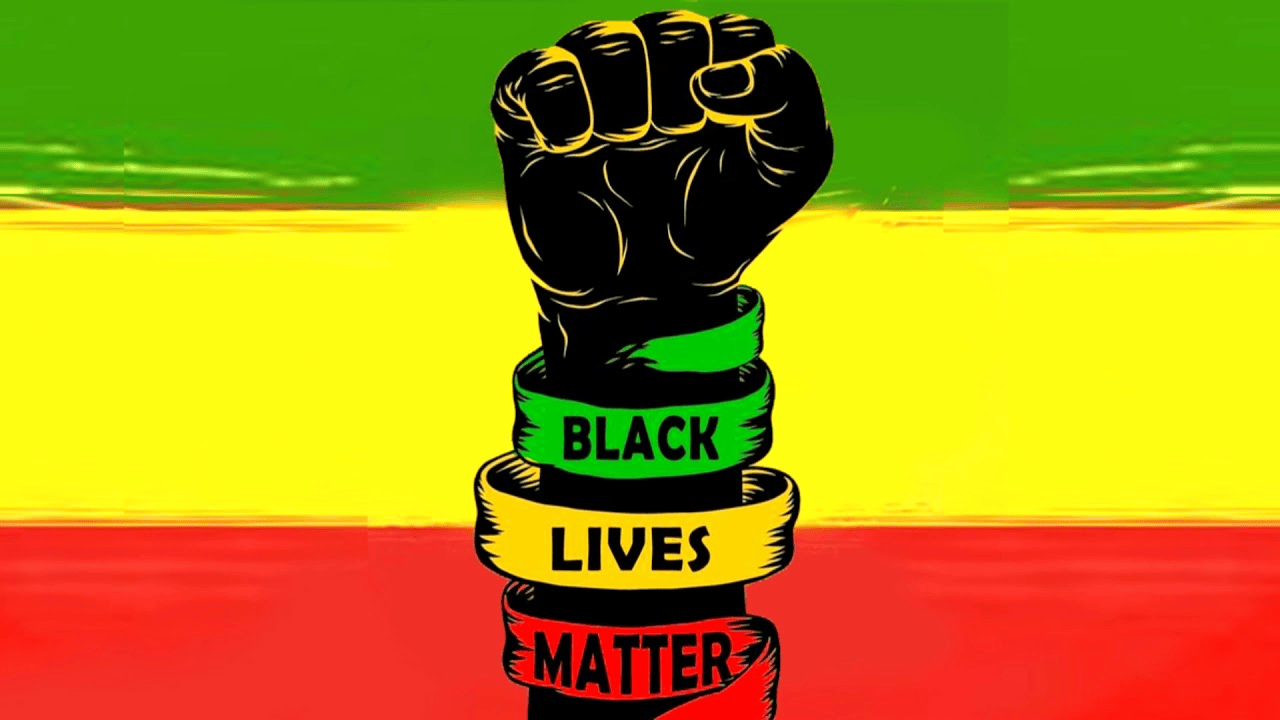

Black Lives Matter: A Reggae Tribute

Protest playlists made in 2020 mostly reached for the obvious American canon. This one does something more interesting: it goes to Jamaica and Britain, and it demonstrates that a complete vocabulary for talking about state violence, dignity and resistance had already been built in reggae — and had been in continuous use since the early seventies.

The sequencing makes the argument chronologically as well as musically. Roots reggae, dub poetry, dancehall and the contemporary revival all sit together, and the continuity of concern across five decades is the point.

What to listen for

Linton Kwesi Johnson opens the set, and that is the right decision. Britain's foremost dub poet wrote about policing, deportation and racial violence in London with a precision no song has improved on, and hearing him first reframes everything that follows as literature rather than mood.

Bob Marley's "War" takes its lyric almost verbatim from Haile Selassie's 1963 address to the United Nations, which is worth knowing before you hear it — it is a speech set to music, not a song about a speech.

Peter Tosh's "Equal Rights" in the extended version is the most uncompromising thing here. Tosh was the least diplomatic of the Wailers and the most explicit about what he wanted.

The Abyssinians' "Forward On to Zion" and Burning Spear's "Social Living" are the roots foundation; Steel Pulse appears four times, which is correct for a band from Handsworth who made Britain's most politically literate reggae.

Mutabaruka's "Any Which Way...Freedom" is the other dub-poetry entry and the most confrontational.

Chronixx's "Black Is Beautiful" and Jah9's "In The Spirit" close the loop with the current generation, and Lucky Dube's "House of Exile" brings South Africa into it.

Go deeper

Linton Kwesi Johnson's Forces of Victory and Bass Culture are the essential albums, and his poetry reads as well on the page as it sounds over a rhythm.

For the history: Burning Spear's Marcus Garvey, Peter Tosh's Equal Rights, and Steel Pulse's Handsworth Revolution are the three records that between them contain most of what this playlist is about.

Why it holds up: the reason this set outlasts the moment that produced it is that almost none of these songs were written about a news event. They were written about a condition, which is why a record from 1975 and a record from 2018 make the same argument without either sounding dated — and why the playlist reads as a tradition rather than a response.

Comments

Popular posts from this blog

Monty Alexander VibeZ

There is a moment on almost every Monty Alexander record where the jazz piano trio stops behaving like a jazz piano trio and starts behaving like a Kingston sound system. That moment is the whole point. Fifty tracks deep, this is the sound of a man who never asked permission to be two things at once. The pianist who brought Kingston to the Carnegie stage Monty Alexander was born in Kingston, Jamaica in 1944, and by his teens he was already gigging around the island — close enough to the birth of ska and rocksteady to have absorbed it in his bones rather than learned it from records. He moved to the United States in 1961, and the origin story that follows is the kind that sounds invented: Frank Sinatra heard him playing in a Miami club, and Jilly Rizzo, Sinatra's friend and club owner, put him behind the piano at Jilly's in New York. From there Alexander fell in with Milt Jackson and Ray Brown, two of the most demanding rhythm partners in the music, and never really ...

Kashif VibeZ

Kashif is the reason a lot of 1980s R&B sounds the way it does — and the reason you can hear the difference between a synth bassline played by someone who understood bass and one programmed by someone who didn't. This is a producer's playlist, and the producer is everywhere. The architect of the synthesized soul record Kashif was born Michael Jones in Brooklyn in 1956, raised in foster care, and taught himself music young enough that by his teens he was touring with B.T. Express. What he did next reshaped a decade. In the early 1980s, as a producer, arranger and multi-instrumentalist, he was among the first to build R&B records around programmed synthesizers — the Minimoog bass, the Linn drum machine, the Fairlight — without letting them sound cold. That distinction matters. Plenty of producers adopted the new gear; Kashif made it groove . His basslines are played with the phrasing of a funk bassist, full of slides and ghost notes, which is why rec...

De La Soul VibeZ (R.I.P Trugoy the Dove)

Trugoy the Dove died in February 2023, weeks before De La Soul's catalogue finally reached streaming after a fifteen-year legal deadlock. Thirty-one tracks, and a difficult kind of timing. Rest in peace, Dave David Jude Jolicoeur — Trugoy the Dove, later just Dave — formed De La Soul in Amityville, Long Island with Posdnuos and Maseo. Their 1989 debut 3 Feet High and Rising , produced with Prince Paul , remains one of the most inventive records in the history of the genre: dense with samples from Steely Dan to Johnny Cash to French language instruction tapes, funny, formally strange, and entirely uninterested in the postures rap was expected to strike. The consequence of that invention was a curse. The sample clearance landscape changed after Gilbert O'Sullivan sued Biz Markie in 1991, and De La Soul's early catalogue — built on hundreds of uncleared fragments — became legally impossible to license. For roughly fifteen years, their most important a...