
Twenty-five tracks from the group that invented new jack swing and changed how R&B records were built.
OneLove
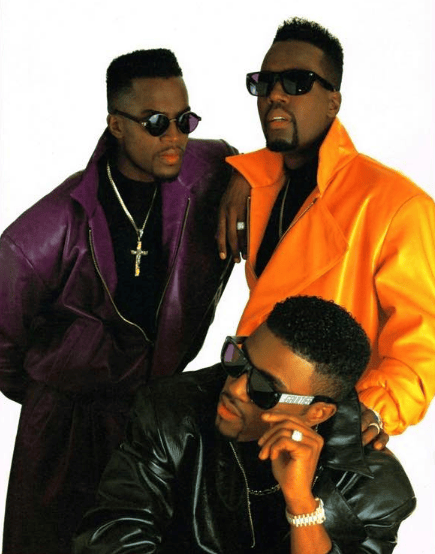
Guy
Guy were Teddy Riley, Aaron Hall and — after Timmy Gatling's departure — Damion Hall, and their 1988 debut is one of the genuine hinge points in Black American music.
The innovation was Riley's. He took hip-hop's drum programming — hard, swung, sampled — and put R&B singing over it, which nobody had properly done. The result, christened new jack swing by the critic Barry Michael Cooper, dominated the following five years and is the direct ancestor of essentially all modern R&B production.
Aaron Hall is the other half of the story. His singing — enormous, gospel-derived, unashamedly indebted to Charlie Wilson of The Gap Band — became the template for a generation of male R&B vocalists, Jodeci's K-Ci very much included.
What to listen for
"Groove Me" is the opening statement and the clearest demonstration of the formula.
"Teddy's Jam" and its sequel are the instrumental showcases where Riley's production is least disguised.
"Piece Of My Love" is the ballad that shows how much the singing owed to seventies soul despite everything else being new.
"Let's Chill" is the biggest R&B hit and remains one of the definitive slow jams of the era.
"I Like" and "Her" are the deep cuts from the first album, and "Do Me Right" is the funkiest.
"Yearning For Your Love" is the Gap Band cover, which makes the lineage explicit and is a considerable performance.
"New Jack City" is the soundtrack title track for the film that named the genre, and "Wanna Get With U" comes from the nineties reunion album.
Go deeper
Guy (1988) is the essential album. Then follow Teddy Riley outward: his productions for Bobby Brown, Keith Sweat, Michael Jackson (Dangerous) and his own group Blackstreet account for a remarkable share of a decade.
Aaron Hall's solo record The Truth is worth hearing, and Jodeci's Forever My Lady is where the vocal style he established went next.
Listening note: the drums are the innovation and they are worth isolating. Hard, swung and sampled rather than played smooth, they gave R&B singing a floor it had never had, and almost every rhythm track in the genre for the following thirty-five years descends from what is happening on these records.
Play the debut album straight through before anything else; the argument for its importance is easier to hear in sequence than in singles.
Comments
Post a Comment